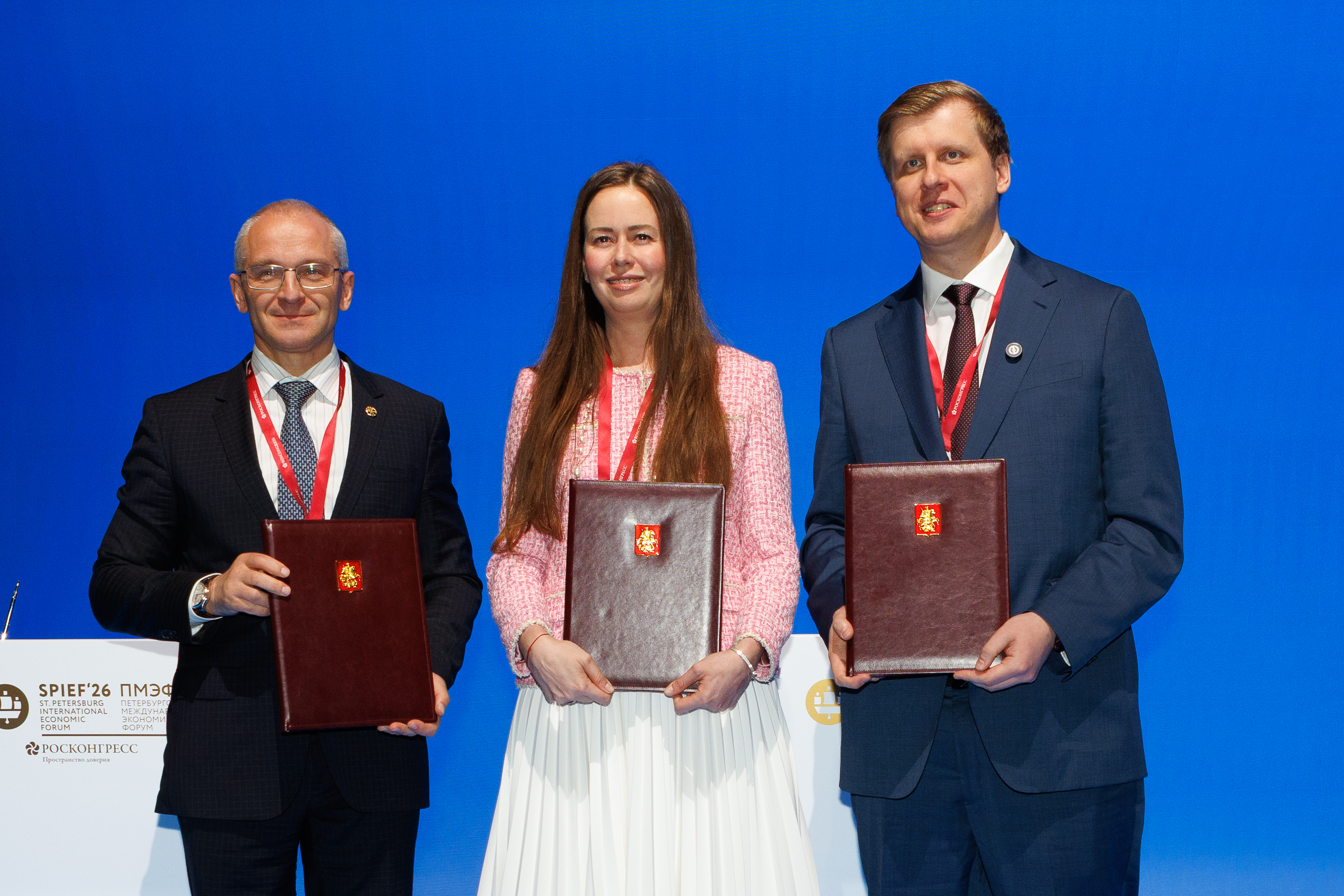
At the St. Petersburg International Economic Forum (SPIF), the
"Rosatom" Fuel Division signed a number of agreements aimed at
establishing in Russia a comprehensive infrastructure for certification,
accreditation and service of lithium-ion batteries. The agreements reached at
SPIEF will improve safety and reliability of energy storage and electrical
transmission systems. Among other things, it would also strengthen the
technological sovereignty of the Russian battery manufacturing industry.
In particular, an agreement was signed with the Department of Investment and Industrial Policy of Moscow to establish a service center for maintenance and repair of lithium-ion batteries for electric transport. This center will be an important element of the urban infrastructure for maintaining the serviceability of energy storage systems, which is especially important against the background of large-scale development of the use of electric buses, cargo and specialized vehicles, as well as electric river transport and electric-powered municipal vehicles.
In addition, a cooperation agreement on accreditation and certification of electricity storage systems and their components was signed with the Federal Accreditation Service (Russian accreditation) and the Department of Investment and Industrial Policy of Moscow. The key objective of the partnership is to establish in Moscow a modern testing and certification infrastructure for lithium-ion battery systems, which will improve the safety of their operation, life cycle efficiency and ensure Russia tech self-reliance in this field.
An integrated ecosystem, from testing and certification to battery service, is indispensable part of the entire industry. The own testing facilities and clear and uniform quality requirements reduce dependence on imported solutions, alleviate implementation risks of new technologies and accelerate the market entry of domestic products. For producers of electric vehicles and energy storage systems, this means predictable rules of the game, accelerated time-to-market, and increased trust from customers and infrastructure providers.
“The extensive work with Russian accreditation and the government of Moscow gives us the opportunity to build a transparent and modern certification ecosystem in a strategically important industry. Combining industry and compliance expertise and infrastructure resources of the capital city will allow us to set new quality and safety standards as well as accelerate the introduction of domestic solutions in the field of energy storage," commented Anastasia Mikhailova, Director of the Energy Storage Systems business unit at Rosatom's Fuel Division.
For Moscow, the development of this kind of infrastructure means not only
strengthening its industrial potential, but also increasing the reliability of
the city electric transportation system. The availability of a specialized
service center and a modern testing facilities will allow for more predictable
operation of passenger electric transport, lower operating costs and increased
safety for passengers and citizens.
The agreements signed provide a framework for developing national standards consistent with international best practices. This unlocks new potential for exporting Russian solutions, developing cooperation between component manufacturers, infrastructure development contractors and providers, and stimulating the creation of new high-tech jobs. The cooperation between Rosatom, Russian accreditation and the Moscow City Government is of a long-term nature and will be developed within the framework of separate roadmaps and agreements, forming a full-fledged infrastructure for certification and maintenance of lithium batteries in Russia.
Rosatom Fuel Division includes enterprises for fabrication of nuclear fuel,
uranium conversion and enrichment, production of gas centrifuges, as well as
research and development organizations. As the single source provider of
nuclear fuel to Russian nuclear power plants, the division provides fuel for a
total of more than 70 energy reactors in 15 states, research reactors in nine
countries, and transport reactors for the Russian nuclear fleet. Every sixth
power reactor in the world runs on the Division fuel. Rosatom Fuel Division is
the world largest producer of enriched uranium, as well as the leader in the
global stable isotopes market. The Fuel Division is actively developing new
businesses in chemistry, metallurgy, energy storage technologies, 3D printing,
digital products and decommissioning of nuclear facilities.
The Energy Storage business unit is being developed as part of Rosatom Fuel Division. It is aimed to deliver lithium-ion energy storage systems for emergency and uninterruptible power sources; hybrid systems involving renewable generation sources; traction batteries for electric vehicles, special equipment, and other applications. The lithium-ion battery gigafactory project to produce lithium-ion cells and rechargeable batteries is being implemented in the Kaliningrad Region and New Moscow. Kaliningrad gigafactory started operating in 2025, the start of production in New Moscow is scheduled for 2026. As projected the plants with a total output capacity of about 8 GWh will provide batteries for about 100 thousand electric cars per year. Dedicated internal R&D capabilities allows to develop tailor-made solutions as well as conventional systems. Our team supports the project from R&D to manufacturing stages and provides service support.