Rosatom
State Corporation will take part in the Third Russia–Africa Summit as a Title
Partner. The summit will be held in Moscow on 28–29 October. The corporation
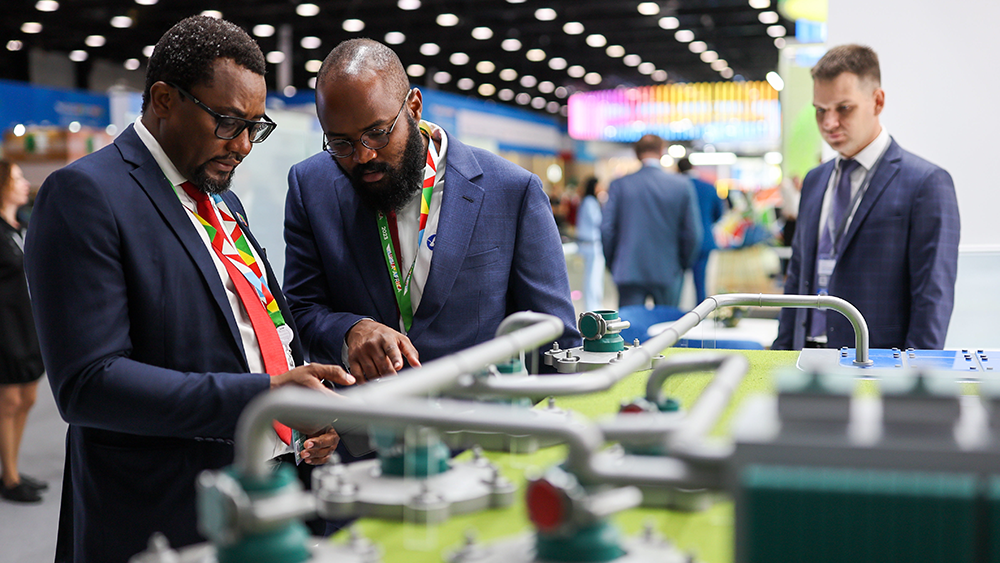
will participate in the exhibition and business programmes: its exhibition
stand will showcase nuclear solutions for countries across the region, while
thematic sessions will explore prospects for cooperation in nuclear
technologies and logistics.
A number of
bilateral documents are expected to be signed on the sidelines of the summit,
including with new partner countries, alongside roadmaps for implementing
previously concluded agreements. These documents will set out the next steps in
developing cooperation in the peaceful uses of nuclear energy.
One of the
key themes will be the integrated use of nuclear technologies to address
African countries’ socio-economic development needs, from reliable energy
supplies to advances in nuclear medicine, agriculture and science. Participants
will discuss how to draw on existing resources and expertise to develop
national nuclear industries, how to get initial projects under way, and how to
overcome the challenges involved. Particular attention will be paid to the
contribution of nuclear solutions to strengthening the technological
sovereignty of countries across the continent.
Training the next generation of specialists will be the focus of a roundtable to be held on 27 October, on the eve of the summit, at the Peoples’ Friendship University of Russia named after Patrice Lumumba (RUDN University). African graduates of Russian and Soviet universities and representatives of Russian universities will discuss how to bring together the experience of different generations and foster cooperation between education and industry to advance nuclear technologies across the continent.
Africa has
significant potential for economic and technological development. Greater
access to reliable and affordable electricity can help unlock this potential.
Several African countries are considering nuclear technologies as a means of
strengthening energy independence and supporting development in industry,
healthcare, agriculture and science.
Rosatom
places particular emphasis on training local specialists as the foundation for
the independent, long-term development of nuclear industries in partner
countries. More than 370 students from 26 African countries are studying
nuclear and related disciplines at Russian universities. Around 100 places are
allocated annually to citizens of African countries to study at Russian
universities on programmes relevant to the nuclear industry.
One of the
main solutions Rosatom offers coastal African countries is floating power units
(FPUs), each with an electrical capacity of 100 MW and equipped with two
RITM-200M reactors. This configuration could meet the electricity needs of
coastal industrial zones, port infrastructure, mining operations and remote
areas. FPUs can supply electricity either to the grid or to individual
consumers and can also be considered in combination with water desalination
solutions. FPUs operate under a “greenfield” principle, with no nuclear fuel
handling at the operating site. All operations involving fresh and spent fuel
are carried out exclusively at a specialised facility in Russia, so the
customer does not need to establish the corresponding infrastructure.