The Fuel
Division of Rosatom, which is developing the additive manufacturing business of
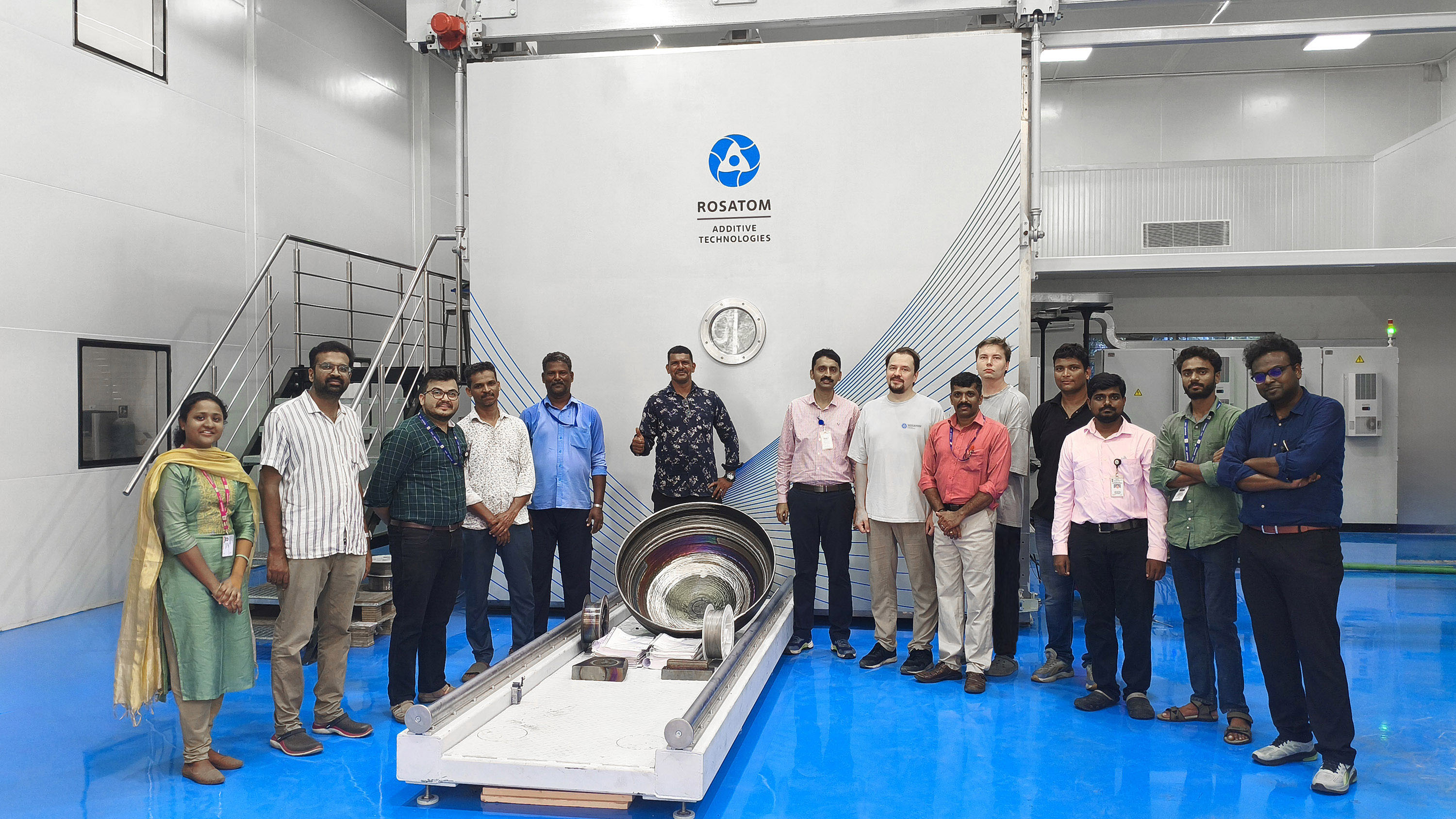
the State Corporation, has successfully supplied the RusBeam 2800 industrial 3D
printer to India. The equipment is based on Electron Beam Additive
Manufacturing technology (EBAM) and it has been successfully launched and
commissioned. The machine will be used to manufacture metal parts
for India’s aerospace industry.
The Indian customer’s choice of Rosatom’s technology underscores the global competitiveness and compliance of Russian solutions with the most stringent international standards. The contract was signed thanks to the victory in the international tender.
“Rosatom is making a pivotal contribution to the strategic technological partnership between Russia and India. Following the December 2025 summit of our leaders, Vladimir Putin and Narendra Modi, their joint statement highlighted the prospects of cooperation in peaceful nuclear energy and space, including plans to deepen cooperation on non-energy nuclear applications and new non-nuclear products. We won this tender offering not only cutting-edge Russian hardware but also our technological expertise, materials, and service, all tailored to the customer’s requirements. We are already in discussions with our Indian partners regarding further supplies, joint R&D in additive technologies, as well as potential localization of equipment manufacturing in India,” said Alexey Likhachev, Director General of Rosatom.
The high deposition rate and vacuum-controlled environment of the EBAM machine from Rosatom represents a significant leap in ISRO's capability to fabricate large-scale, near-net-shape components from advanced titanium alloys, superalloys and refractory alloys. Integration of this critical technology can drastically reduce lead times for aerospace structures while ensuring the material integrity required for the extreme conditions of space. This strategic addition to our additive manufacturing portfolio will be a cornerstone in achieving the rapid prototyping and production goals essential for our future orbital infrastructure and deep-space missions like Gaganyaan, Bharatiya Antariksh Space Station and Chandrayaan missions.
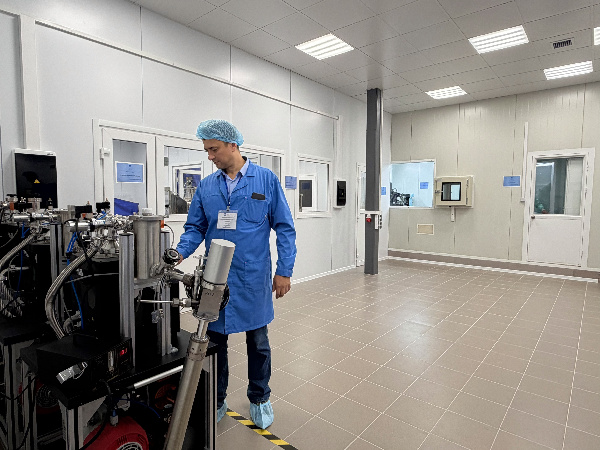
The RusBeam 2800 is now India’s largest electron-beam wire deposition 3D printer operating under vacuum. The machine was custom-built for the Indian client and is operated with software developed by Rosatom. It can produce large-scale parts up to 2.8 meters in height and weighing up to four tones, including components with complex geometries. The system’s productivity is a key advantage: with a print speed of up to 50 mm/s, it can fabricate a 50 kg part within just five hours. The printer is compatible with a wide range of refractory and reactive materials, including titanium-, nickel-, and cobalt-chrome-based alloys.
Additive manufacturing enables the production of parts and components that are difficult or impossible to make using traditional casting or machining methods. 3D printing reduces component weight, optimizes material usage and shortens production cycles. Modern systems allow rapid reconfiguration for various materials, supporting applications from nuclear power and aerospace to medical devices. Development and manufacturing timelines can be reduced from months to days with the usage of additive technologies. The process is very compact—eliminating the need for tooling, casting or milling—and allows structural mass optimization. At the end-of-life stage, costs may be reduced by up to 90 % due to minimal waste generation; materials can be recycled for a near-zero-waste process. Complex parts that previously required multiple welded elements can now be grown as single pieces, with metal utilization rates approaching 90% as only the necessary volume is deposited rather than machined from solid billets.