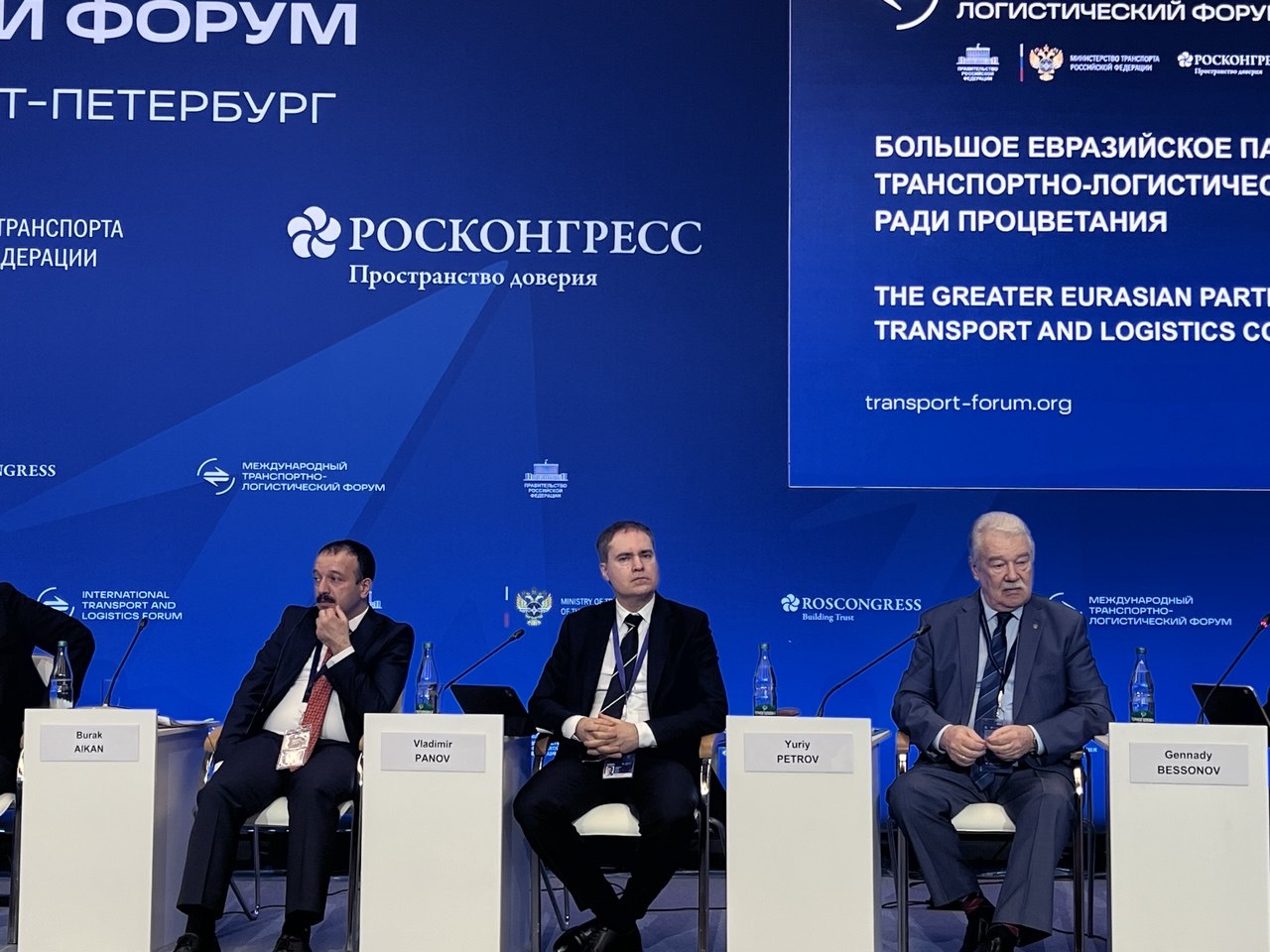
Rosatom’s representatives are participating in the International Transport and Logistics Forum, which started in St. Petersburg on 1 April.
During the session "Greater Eurasian Partnership: Strengthening Transport and Logistics Connectivity for Prosperity", which was held on the first day of the Forum, Vladimir Panov, the Special Representative of Rosatom for Arctic Development, emphasized the ever-increasing importance of the Northern Sea Route as an alternative and safe route for international shipping. He outlined the key areas for the development ofthe NSR as a crucial component of the international transport network.“We are seeing that the world is increasingly seeking sustainable logistics solutions, and the Northern Sea Route (NSR) firmly holds its position as a viable option. The NSR has immense potential due to both its abundant resource deposits and the possibility for organizing year-round navigation. Rosatom, with its unique fleet of nuclear icebreakers, is prepared to ensure reliable and, most importantly, safe transportation along the entire Arctic coast, connecting Asia and Europe”, he said.
Vladimir Panov noted that shipping along the NSR, which is an integral part of the Trans-Arctic Transport Corridor, is developing dynamically. In 2025, 8.3 million tons of cargo were shipped eastwards, a 15% increase compared to the figure of the previous year. This growth is largely due to the constant operation of icebreakers in the eastern part of the NSR during the summer and fall seasons, which allows ships even without an ice class to sail safely.
The Northern Sea Route is Russia's main shipping
route in the Arctic, stretching over 5,600 km. The NSR is part of the
Trans-Arctic Transport Corridor (TTC). The travel time along the NSR from Asia
to Europe is approximately 21 days, 1.5 times faster than via the Suez Canal
(approximately 31 days). Much of the route passes through internal waters and
Russia's exclusive economic zone, which guarantees a high level of safety. The
advantages of the TTC have also been recognized in other countries, and
international container shipping along the NSR is growing: 7 container voyages
were made along the NSR in 2023, 14 in 2024, and 24 in 2025 (with a record
volume of cargo transported — over 400,000 tons of containerized cargo, a 130%
increase from the previous year).
The International Transport and Logistics Forum
is an important event in the area of transportation infrastructure and
logistics development. It brings together key industry players, government
representatives, and expert community to discuss current challenges and future
prospects for the industry. In 2026, participants of the Forum held in St.
Petersburg explored ways to strengthen transport connectivity in the context of
the Greater Eurasia Partnership.
The comprehensive development of the Russian Arctic is considered a national strategic priority. Increasing the cargo traffic along the NSR is crucial for the fulfilment of the tasks set in the area of transportation and cargo delivery. The development of this logistics corridor is ensured due to cargo shipping organized on a regular basis, construction of new nuclear icebreakers, and modernization of the relevant infrastructure. Rosatom companies are actively involved in these efforts.