The Fuel Division of Rosatom and the
national oil and
gas corporation Petrovietnam have signed an agreement to develop a project for
establishing an Additive Manufacturing Center in the Socialist Republic of
Vietnam.
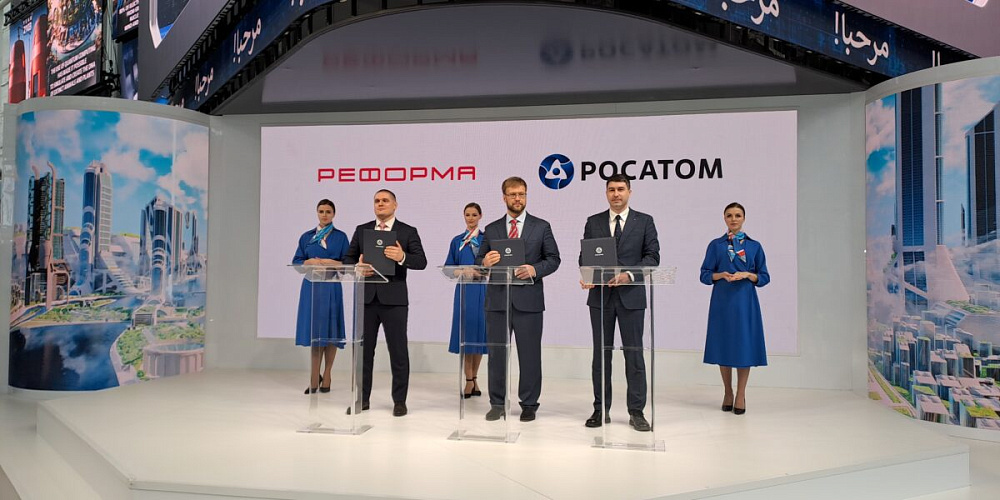
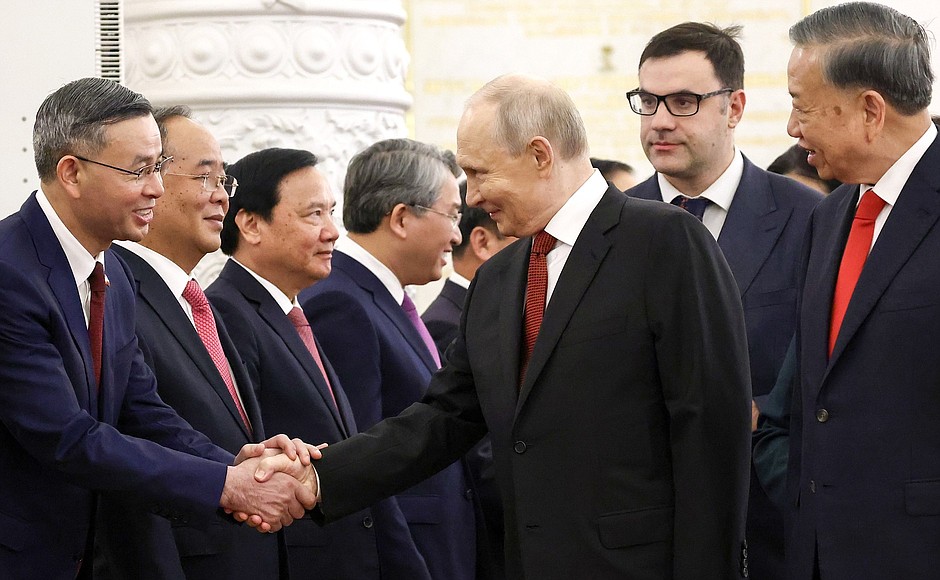
The formal ceremony took place on
September 9, 2026, in the presence of the President of Russia, Vladimir Putin,
and the General Secretary of the Central Committee of the Communist Party of
Vietnam, President of the Socialist Republic of Vietnam To Lam, who is
currently on an official state visit to Russia. The ceremony was attended by
Nikolay Spassky, Deputy Director General for International Activities at the
Rosatom State Corporation, and Le Ngoc Son, Chairman of the Board of Directors
of Petrovietnam.
The agreement defines the scope and delivery schedule for the equipment required to launch a fully functional 3D printing center in Vietnam. In particular, it provides for the supply of 3D printers manufactured by Rosatom, manufacturing metal items using selective laser melting and direct laser deposition technologies, as well as additional Russian equipment for heat treatment, turning operations, laboratory analysis, and other applications.
"The Additive Technology Center for Petrovietnam is not merely the introduction of 3D printing — it is a strategic tool for addressing practical challenges across the fuel and energy complex," noted Phan Tu Giang of Petrovietnam. "The center will enable rapid production of complex components for drilling and pumping equipment, reduce production downtime through fast prototyping, and deploy modern additive technologies for the restoration and repair of equipment and large-scale components."
In addition, the agreement establishes the framework for organizing metal powder production in Vietnam, including technical training and information exchange, as well as the joint development of quality standards, qualification procedures, and product certification.
"Going forward, we are ready to discuss the localization of 3D printer manufacturing in Vietnam. We have already completed similar work with our partners in Belarus in 2025, where we transitioned from supplying 3D printers to their joint assembly and delivery to third-party customers," noted Ilya Kavelashvili, Director of the Additive Technologies business unit at the Rosatom Fuel Division.
Additive
technologies enable the production of parts and
components that are difficult to manufacture using traditional casting and
machining methods. Three-dimensional printing reduces the weight of products,
optimizes material consumption, and shortens production timelines. Modern 3D
printers allow for rapid reconfiguration of printing parameters to produce
items from a variety of materials. 3D-printed products find applications across
a wide range of fields — from nuclear and space technologies to medicine.
The Fuel
Division of the Rosatom State Corporation (managed by TVEL
JSC) comprises enterprises for nuclear fuel fabrication, uranium
conversion and enrichment, gas centrifuge production, as well as research and
design organizations. As the sole supplier of nuclear fuel for Russian nuclear
power plants, TVEL supplies fuel to a total of over 70 power reactors in 15
countries, research reactors in nine countries worldwide, and transport
reactors of the Russian nuclear fleet. One in every six power reactors worldwide
operates on TVEL fuel. The Rosatom Fuel Division is the world's largest
producer of enriched uranium and a leader in the global market for stable
isotopes. The Fuel Division is actively developing new businesses in the areas
of chemistry, metallurgy, energy storage technologies, 3D printing, digital
products, and nuclear decommissioning. Within the Fuel Division, Rosatom has
established industry integrators for additive technologies and energy storage
systems. http://www.tvel.ru