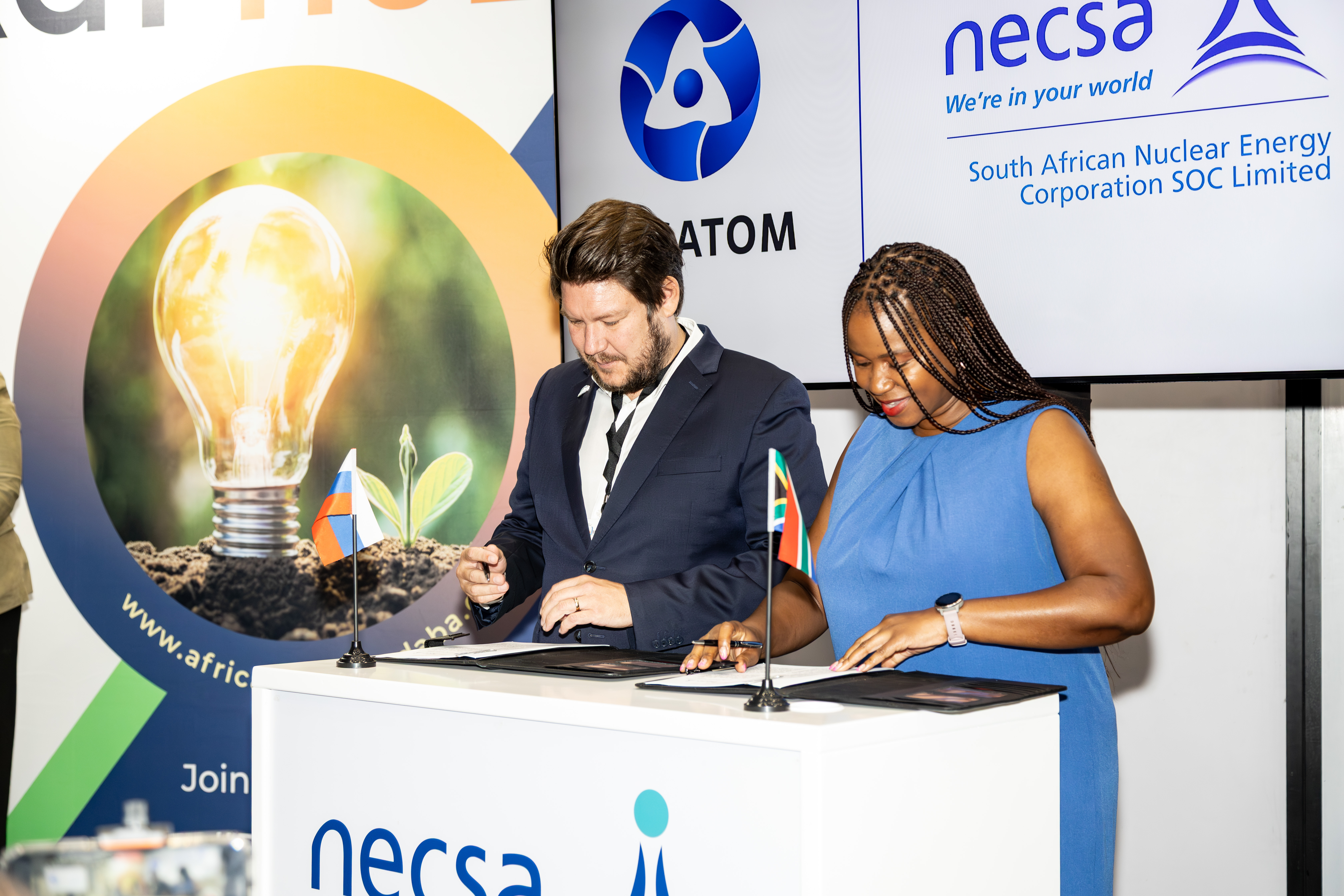
On 5 March 2026, on the sidelines of the Africa Energy
Indaba conference in Cape Town, State Atomic Energy Corporation Rosatom and the
South African Nuclear Energy Corporation (Necsa) signed a Memorandum of
Understanding in the area of workforce development.
The Memorandum establishes a long-term framework for cooperation in skills development and knowledge exchange in the nuclear and related technology sectors. Particular emphasis is placed on training young professionals and strengthening local and regional technical capacity across Africa. Priority areas include joint education and training initiatives, programmes for women and young professionals, short-term employee internships, engineering skills development, and professional competitions as well as collaborative research projects.
“Nuclear power is, first and foremost, about people, their knowledge, experience, and responsibility. Our strategic partnership with Necsa in the field of human capital development is based on shared values: a human-centric approach, commitment to the highest safety standards, innovation, and continuous professional growth. Through our joint training initiatives, we are fostering knowledge exchange that will enable Russian and South African professionals to work together to build a technological future that meets the challenges of the 21st century. As soon as this year, Rosatom will provide additional 15 bursaries for students and young professionals from South Africa to study at Rosatom flagship universities which already host more than 2,400 international students from 65 countries” — noted Rosatom Deputy Director General for Human Resources Tatiana Terentyeva.
“This partnership is focused on building sustainable human capital to support the growth of the nuclear and related technology sectors. Developing skills, empowering young professionals, and expanding leadership capacity which are central to the long-term success of the energy sector” — remarked Necsa Group Executive for Human Capital Sithembile Mbuyisa. “Through collaboration on education, training and knowledge exchange, we aim to contribute to a globally competitive and future-ready nuclear workforce” — she emphasised.