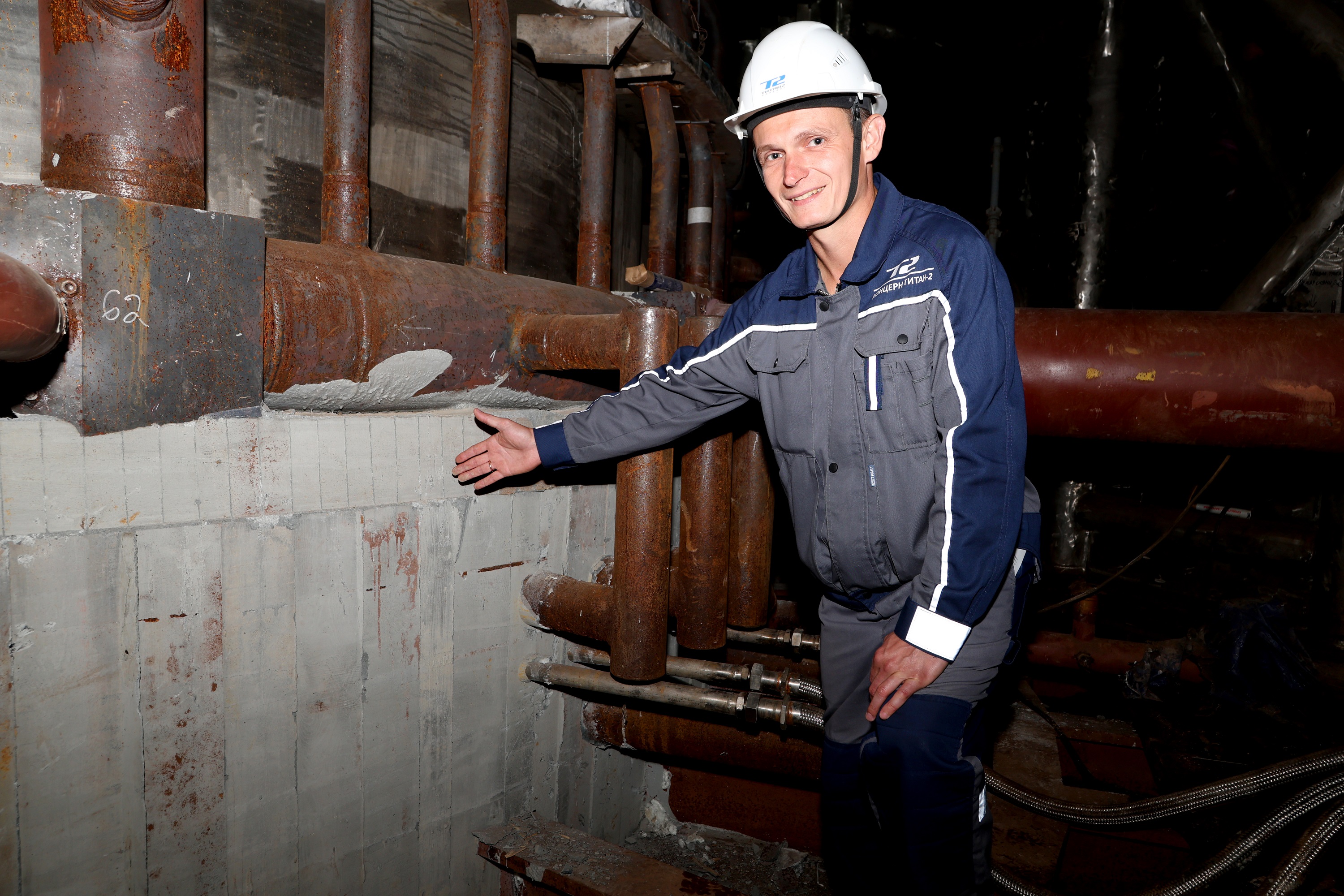
The first
phase of concrete pouring for the BREST-OD-300 reactor vessel has been
completed at the 4th-generation Pilot-Demonstration Energy Complex (PDEC) in
Seversk, Tomsk Region.
PDEC is under
construction on the site of the Siberian Chemical Combine (SCC, an enterprise
of Rosatom's Fuel Division) as part of the "Proryv" (“the
Breakthrough”) strategic initiative — an industry-wide effort to develop
next-generation nuclear energy technology. Concrete pouring for the reactor
vessel will proceed in multiple stages and is scheduled for completion in
winter 2027, with total heat-resistant concrete volume exceeding 7,000 cubic
meters.
Unlike conventional light-water reactors, the BREST-OD-300 features an integral layout. Its vessel is not a monolithic steel structure like those used in VVER-type reactors, but rather a steel-concrete construction housing metal cavities for the reactor core and primary circuit equipment. The spaces between these cavities are being filled with concrete in stages, making it part of the load-bearing structure while simultaneously providing thermal and radiation shielding.
"The reactor vessel design has no precedent worldwide. The integral configuration of BREST-OD-300 enabled this solution, which adds an extra layer of safety and reliability to the unit," said Dmitry Zozulya, Director of the PDEC at SCC.
In parallel,
the site is being prepared for installation of reactor internals. All equipment
is manufactured by Russian enterprises using specialized high-strength
materials.
Earlier in
2026, the pipework connecting the central and four peripheral cavities of the
BREST-OD-300 reactor vessel was completed. This closed the primary circuit, in
which molten lead coolant will circulate — transferring heat from the core,
located in the central cavity, to the steam generators installed in the
peripheral cavities.
A full-scale simulator replicating the operation of a BREST-OD-300 fast reactor unit has been built at the SCC training and information center to prepare operating personnel.
“The Breakthrough” project is Rosatom's
strategic initiative to develop a new nuclear energy platform based on a closed
nuclear fuel cycle using fast-neutron reactors. The technology is designed to
eliminate severe nuclear accidents, remove the need for public evacuation or
resettlement in the event of a unit incident, generate electricity without
accumulating spent nuclear fuel, and enable repeated recycling of used fuel —
thereby removing the constraint of a finite uranium resource base. As part of
this initiative, a pilot-demonstration energy complex is being built in
Seversk, Tomsk Region, on the Siberian Chemical Combine site. It will validate
the technologies, demonstrate a closed nuclear fuel cycle, and mark the first
step toward a new generation of nuclear power.
Generation IV nuclear energy systems — as classified
by the IAEA — represent a family of technologies united by a common outcome:
higher fuel efficiency, enhanced safety, improved energy performance, and
significant reduction of spent nuclear fuel. Generation IV systems have the
potential to fundamentally reshape nuclear power, primarily through a new level
of safety, broader fuel flexibility, and a dramatic decrease in radioactive
waste. Russia is among the global leaders in developing Generation IV technologies:
pre-project work has begun for a BN-1200M unit at the Beloyarsk NPP, and in the
Tomsk Region, a BREST-OD-300 reactor plant with an on-site closed nuclear fuel
cycle is being built for the first time in the world at a single location.
Rosatom's Fuel Division (managed by JSC TVEL) comprises
enterprises for nuclear fuel fabrication, uranium conversion and enrichment,
gas centrifuge manufacturing, as well as research and design organizations. As
the sole nuclear fuel supplier for Russian NPPs, TVEL fuels a total of over 70
power reactors across 15 countries, research reactors in nine nations, and
transport reactors of the Russian nuclear fleet. One in six power reactors
worldwide operates on TVEL fuel. The Fuel Division is the world's largest
producer of enriched uranium and a global leader in the stable isotopes market.
New businesses in chemistry, metallurgy, energy storage, 3D printing, digital
products, and nuclear decommissioning are actively developing within the
division, which hosts Rosatom's industry integrators for additive technologies
and energy storage systems.
The Siberian Chemical Combine (SCC), located in Seversk, Tomsk Region, is part of Rosatom's Fuel Division. It comprises four facilities for handling nuclear materials: an isotope separation plant, a sublimate plant, a radiochemical plant, and a chemical-metallurgical plant. One of SCC's core activities is supplying uranium for nuclear fuel to NPPs. The "Proryv" project — aimed at creating a new technological platform for the nuclear industry based on a closed nuclear fuel cycle with fast-neutron reactors — is being implemented on the SCC site.