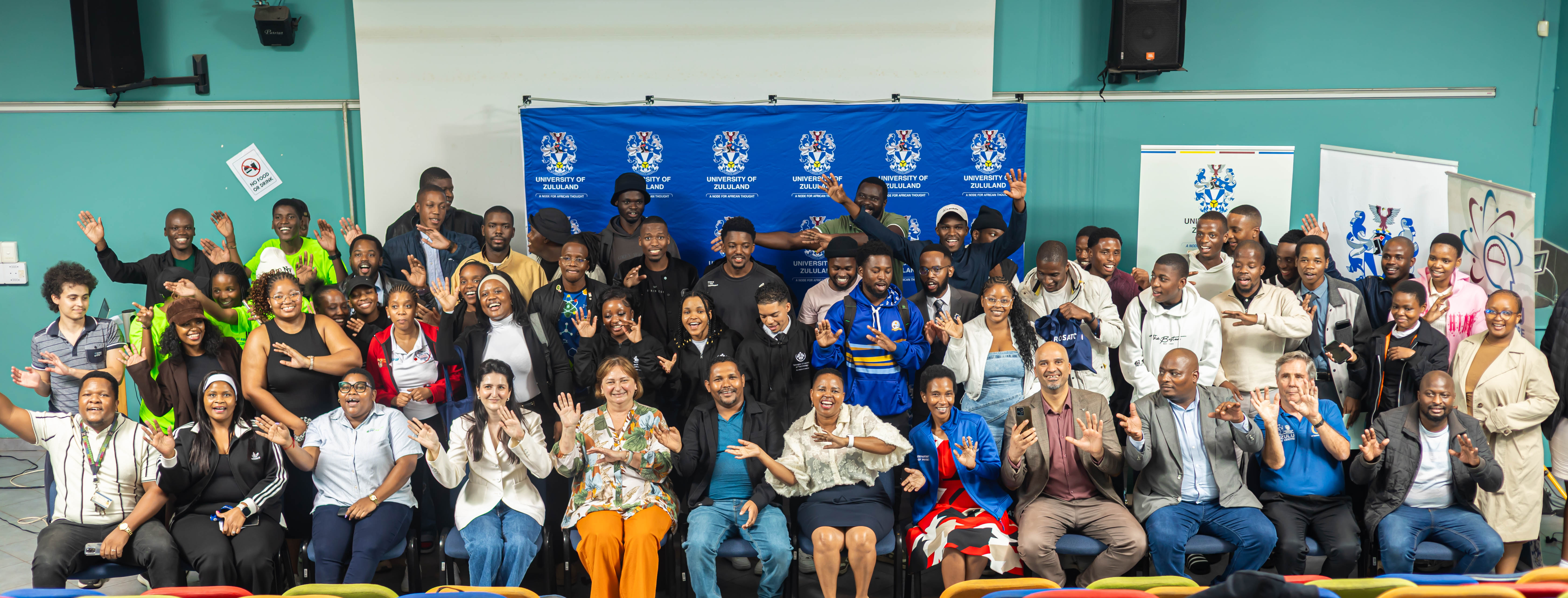
From 5 to 6 May, South Africa hosted its first-ever national selection round of the international engineering hackathon “Global Hackatom” — a 24-hour competition focused on developing innovative solutions for advancing nuclear technologies. The South African stage was organised by the MEPhI and RUDN Universities, with support from Rosatom and South African Nuclear Energy Corporation Necsa. The event took place at the renowned UNIZULU Science Centre, with additional support from the Richards Bay Industrial Development Zone (RBIDZ), highlighting growing regional interest in developing advanced technological and energy-related competencies.
Seven teams representing the University of Zululand
(UniZulu), Tshwane University of Technology (TUT), North-West University (NWU),
the University of the Witwatersrand (Wits), University of Johannesburg (UJ),
University of Limpopo (UL) and Nelson Mandela University took part in the
competition. Students interested in innovation, engineering and nuclear energy
technologies spent two days working on cases and presenting their solutions.
The winning team “ZuluTech Collective” from the University of Zululand, will
now represent South Africa at the international “Global Hackatom” final in
Moscow.
“South Africa is at a critical moment in its energy journey. We are balancing three fundamental priorities: energy security, access and decarbonisation. As a result, the energy systems of the future must become more diverse, resilient and innovation-driven. Within that evolving mix, nuclear energy and emerging technologies have an important role to play in providing reliable, clean baseload power. It is precisely in this context that platforms like HackAtom are so important. They create space for young people to explore new ideas, develop technologies and rethink how future energy systems can meet growing demands,” highlighted RBIDZ CEO Thabane Zulu during his opening speech.
“To build a stronger country, we must equip our youth with skills, encourage innovation, and demand accountability and excellence from everyone” – said Philani Gabriel Marapira, team leader of the winning team “ZuluTechCollective”.