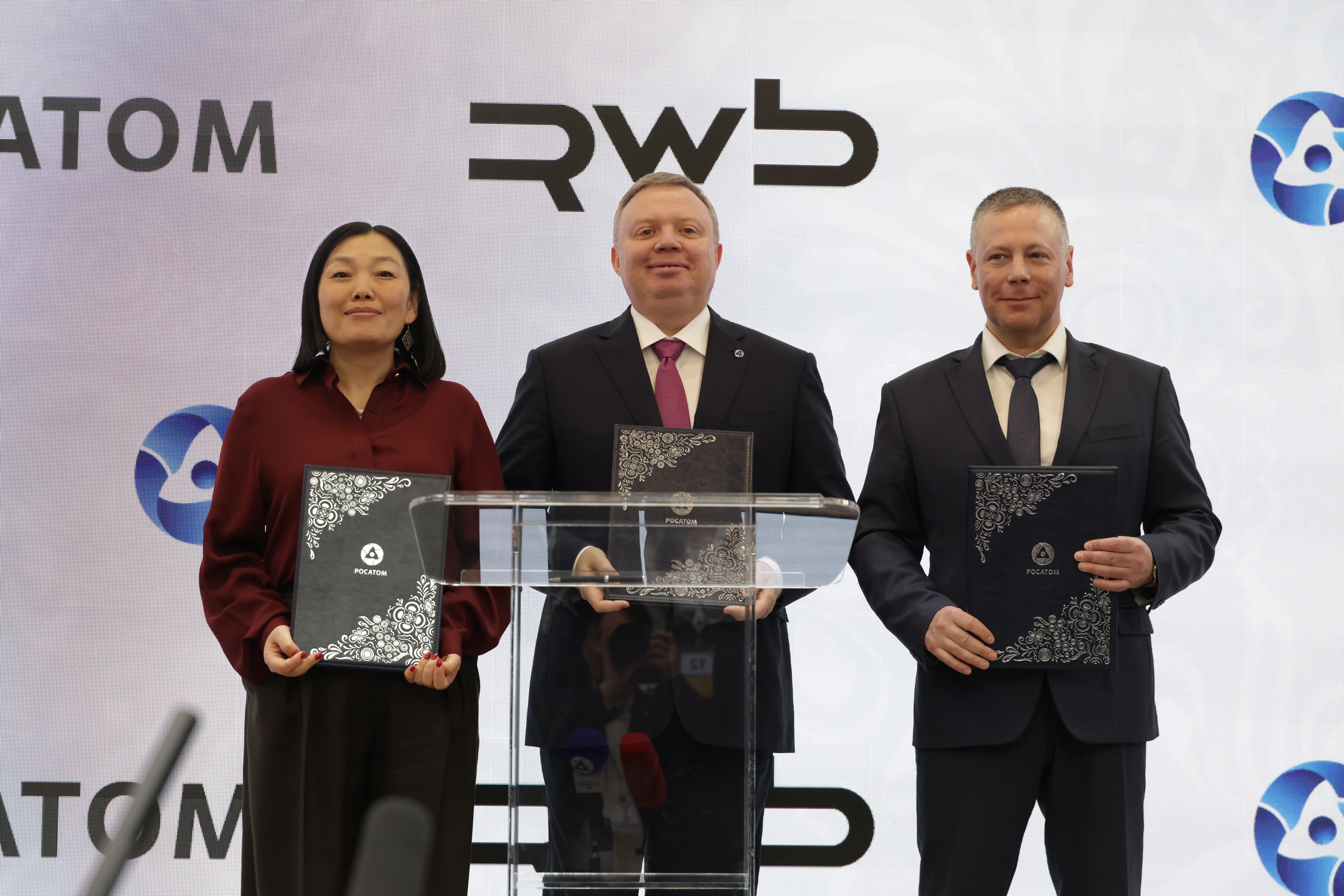
On June 5, at the St.
Petersburg International Economic Forum, Rosatom and its enterprise, the
Federal Environmental Operator (FEO), Yaroslavl Region Government, and RWB
signed an agreement to launch a pilot battery collection project in the region.
The agreement was signed by Kirill Komarov, First Deputy Director General and
Director for Rosatom Development and International Business; Maxim Pogodin,
Director General of the Federal Environmental Operator; Mikhail Evraev,
Yaroslavl Region Governor; and Tatyana Kim, Wildberries Founder and RWB Head.
The project envisages the use of Wildberries pick-up points (PUPs) as
centralized collection sites for spent chemical power sources, including
batteries. Specialized collection containers will be installed at Wildberries
pick-up points throughout Yaroslavl Region.
The agreement is aimed at creating an integrated system for collecting Class I and Class II hazardous waste generated by households. Initially, the project will focus on spent chemical power sources, which will subsequently be transported for treatment, recycling, recovery, and safe disposal. Based on the pilot project results, the parties intend to develop a standard model for organizing such collection systems for further implementation across other regions of Russia. The signing of the agreement was timed to coincide with World Environment Day and Russia’s Environmental Protection Specialist Day, both celebrated annually on June 5.
“Rosatom possesses a broad portfolio of environmental solutions that have already proven their effectiveness and improved the lives of millions of people through various major environmental projects, including the remediation of the Krasny Bor landfill site and the environmental rehabilitation of Usolye-Sibirskoye. We consistently introduce advanced environmental technologies and promote responsible resource management. At the same time, we firmly believe that environmental consciousness can only develop through active community engagement and the creation of convenient and accessible infrastructure for citizens. I am confident that the support of Yaroslavl Region Government and the use of Wildberries’ extensive pick-up point network for battery collection will encourage greater public participation in separate waste collection practices and become an important step toward fostering a stronger environmental culture. The success of this project will enable its expansion across the entire country,” commented Kirill Komarov, First Deputy Director General and Director for Rosatom Development and International Business.
“The Federal Environmental Operator is not merely participating in the creation of infrastructure: we are assuming responsibility for establishing a complete, transparent, and safe hazardous waste management cycle. Batteries collected through Wildberries points will be sent to specialized facilities for environmentally sound recycling. Valuable materials recovered fr om them, including iron, zinc, manganese, and graphite, will be returned to industrial circulation as secondary raw materials. This represents a closed-loop, environmentally sustainable, and economically viable process. The pilot project in Yaroslavl Region is our direct initiative aimed at making battery collection as accessible as possible to every resident. However, no system can function effectively without public trust and conscious participation. That is why, together with the regional Government, we will continue our educational outreach efforts, explaining why batteries should never be disposed of in household waste and demonstrating that when citizens are ready to make environmentally responsible choices, it is our duty to provide them with convenient and reliable solutions. I am confident that by combining the efforts of government, business, and citizens, we will create a model that can later be offered to the entire country,” noted Maxim Pogodin, Director General of the Federal Environmental Operator.
“Promoting responsible practices among our customers and partners is one of the key priorities of RWB’s sustainability strategy, while environmental protection is a shared responsibility for all. We are therefore pleased to join forces with the federal waste management operator and Rosatom, one of the key participants in the national project ‘Environmental Well-Being,’ in addressing the issue of battery disposal. We are ready to provide our retail infrastructure for the launch of this pilot project in Yaroslavl Region, with the prospect of expanding it across all regions wh ere we operate within the Russian Federation,” stated Tatyana Kim.
“We are consistently fostering a culture of environmental responsibility across the region. Yaroslavl Region ranks among the top five regions in Russia for battery collection and recycling. The new collection points will expand the existing infrastructure, making it even more convenient and accessible while also improving environmental awareness among residents. I hope our experience will serve as an example and encourage other regions and companies to join similar initiatives,” mentioned Mikhail Evraev, Yaroslavl Region Governor.
Rosatom’s Environmental Unit plays a significant
role in ensuring environmental safety within the nuclear industry, supporting
public environmental well-being, and contributing to the country’s sustainable
development. The activities of the Unit include radioactive and hazardous
industrial waste management (safe storage, treatment, and disposal),
environmental monitoring, remediation of contaminated sites (including nuclear
legacy facilities), and ecosystem restoration. The Unit is also responsible for
developing and implementing circular economy technologies. As part of Russia’s
national Ecology Project, it is establishing a nationwide system for the
management of Class I and Class II industrial hazardous waste, including the
creation of recycling infrastructure and the deployment of digital monitoring
tools through the Federal State Information System for Hazardous Waste
Management. The Federal Environmental Operator is among the entities operating
within Rosatom’s Environmental Unit.
The Federal Environmental Operator is a specialized Rosatom enterprise responsible for managing various categories and classes of waste across Russia. It serves as the federal operator for Class I and Class II hazardous waste management in the Russian Federation. The company is developing a national management system for such waste by ensuring traceability and oversight through the Federal State Information System for Hazardous Waste Management digital platform while creating advanced infrastructure for waste treatment and neutralization.
The St. Petersburg International Economic Forum (SPIEF) is one of the most important economic events in the CIS region. Organized by the Roscongress Foundation, the forum has been held annually since 1997. The SPIEF has gained a reputation of a key global event with action-oriented discussion of modern economic problems facing Russia, emerging markets and the world as a whole; making practical decisions; launching innovative large-scale projects; and new approaches to adapting the global economy to modern conditions taking tangible shape.