On
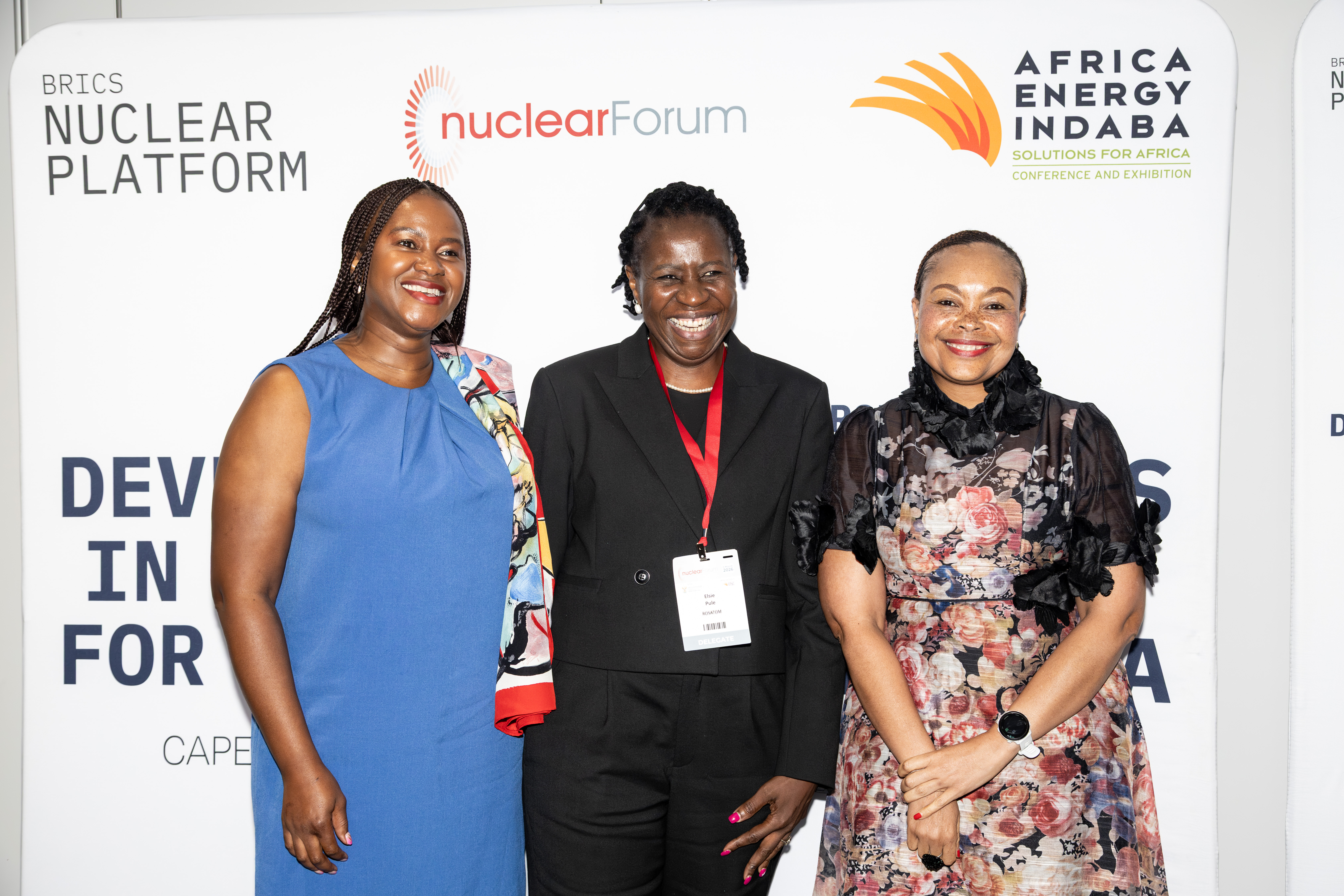
March 5, 2026, in Cape Town, nuclear industry experts discussed the best
practices of the BRICS+ countries in skills development and personnel training
to build nuclear energy capacity in Africa.
The session was attended by Elizabeth Marabwa, Chief Director at the Department of Electricity and Energy (South Africa); Shirley Mabika, Human Resources Operations Manager at the Koeberg Nuclear Power Station, Eskom (South Africa); Tatiana Terentyeva, Deputy Director General for HR at Rosatom (Russia); Sithembile Mbuyisa, Group Executive for Human Potential at NECSA, South Africa (South Africa); Fidele Ndahayo, CEO of the Rwanda Atomic Energy Board (Rwanda), and others. Elsie Pule, Head coordinator of the BRICS Nuclear Platform, moderated the event.
The expert session featured a discussion of best practices in human resources development applied by nuclear organisations from BRICS+ and African countries, as well as a search for solutions to build the “personnel foundation” for the expansion of the nuclear industry on the African continent. During the discussion, participants emphasised the need to accelerate technology localisation and to organise specialist training directly on the ground. It was noted that the professional development of young personnel and human capital in the region requires substantial investment.
“The impact of Rosatom’s human-centric approach proved to have tangible results: over 2 400 students from 65 countries are receiving nuclear education at Rosatom’s partner universities. We are proud that more than 350 of them represent 24 African nations. It is especially important that 70 % of our international graduates successfully build careers in their home countries, applying the knowledge gained to develop national energy programmes,” noted Tatiana Terentyeva, Deputy Director General for HR, Rosatom.
Head coordinator of the BRICS Nuclear Platform Elsie Pule noted: “The issues raised today and the projects outlined will form the basis for the work of the BRICS Nuclear Platform’s “Skills and Talent Development” Working Group. Furthermore, Elsie Pule emphasised: “As Head coordinator of the BRICS Nuclear Platform, I am doubly pleased to witness the participants of the BRICS Nuclear Platform, namely Rosatom and NECSA, signing a Memorandum of Understanding on cooperation in human resource development. This underscores the great importance of joint efforts in both multilateral and bilateral formats”.In the Welcome speech Head coordinator of the BRICS Nuclear Platform also announced the launch of the “Atoms Empowering Africa” competition and stated that the BRICS Nuclear Platform would act as the main partner for the competition. “Atoms Empowering Africa” is a regional competition being held in 2026 for countries on the African continent to support the educational and youth network of the nuclear industry, including developing leadership skills and increasing awareness of nuclear energy among future generations.”
BRICS Nuclear Platform aims at strengthening cooperation among companies with the view of promoting nuclear energy as an environmentally friendly source of energy. Ten participating companies and government agencies of the BRICS members and partners, including CNNC (China National Nuclear Corporation); NECSA (South African Nuclear Energy Corporation); South African Eskom Holdings SOC Ltd. (South African nuclear energy company); NPPD (Nuclear Power Production and Development Company of Iran); Brazilian association for nuclear activities development ABDAN (Associação Brasileira para Desenvolvimento de Atividades Nucleares), Bolivian nuclear energy agency ABEN (Agencia Boliviana de Energía Nuclear); Ministry of Innovation and Technology of Ethiopia; NPPA (Nuclear Power Plants Authority, Egypt), NBEPar (Nucleo Brasil Energia Participações Ltda, Brazil) and the State Atomic Energy Corporation Rosatom (Russia) signed the statements supporting the creation of the Platform. During 2026 major industry venues host the Platform’s expert events. Rosatom is actively involved in the Platform's initiatives, contributing to the development of equitable partnership in the nuclear industry and to the promotion of sustainable energy solutions.