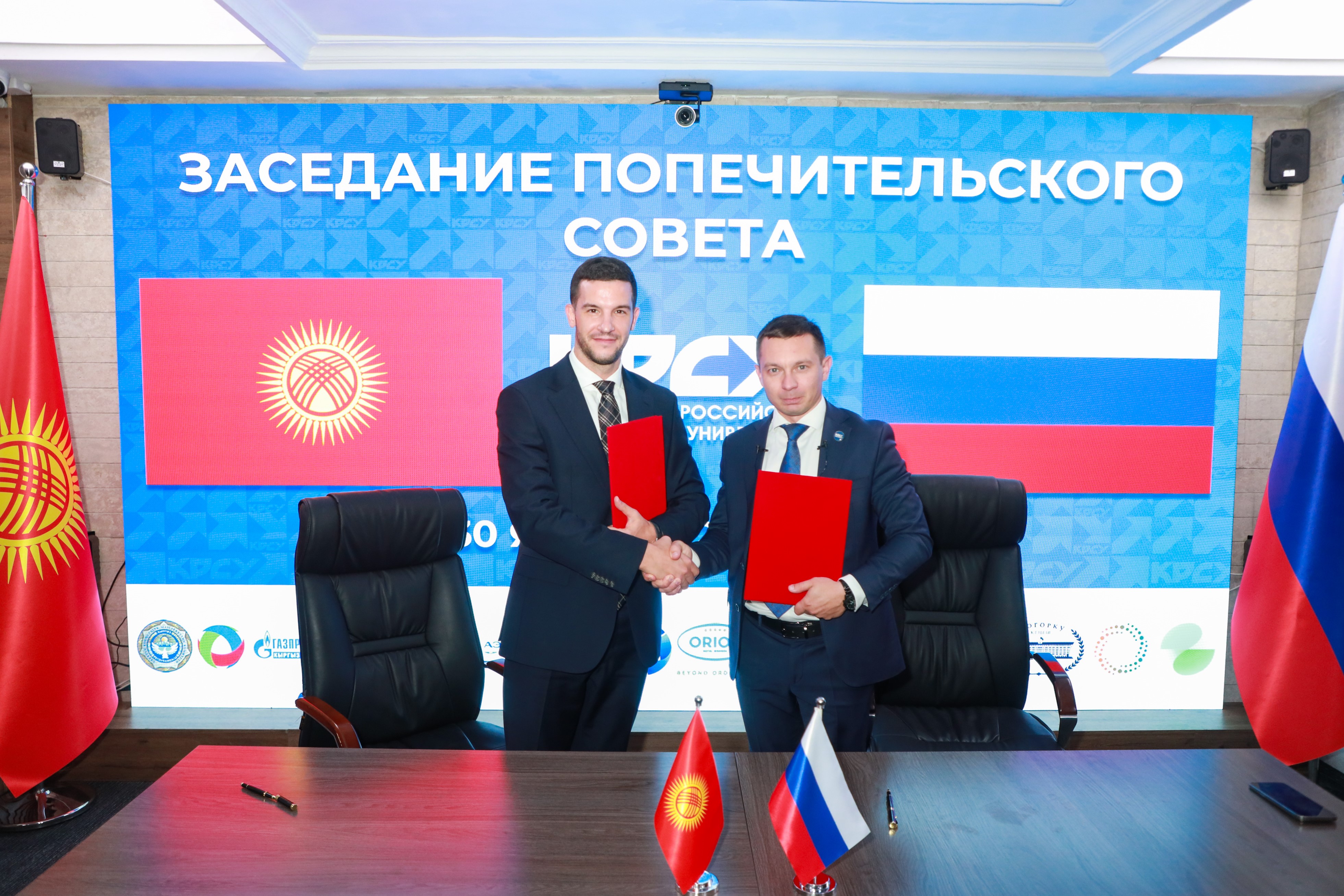
On January 30
in Bishkek (Kyrgyz Republic), the Fuel Division of Rosatom (represented by the
Additive Technologies business unit), B.N. Yeltsin Kyrgyz-Russian Slavic
University (KRSU), as well as the representative office of Rosatom in the
Kyrgyz Republic and the engineering company Boka Hydro KG LLC signed an
agreement on cooperation in the introduction of additive manufacturing
technologies in the renewable energy sector of the republic.
This involves the production of equipment for new and existing hydropower facilities using 3D printing technologies. The cooperation will be implemented in various formats, from joint preparation of pre-design and design documentation to the delivery of equipment and its components to customers concerned.
"Rosatom has unique competencies covering the entire cycle of additive technologies - from batch production of high-tech printers and metal powders to personnel training and service. We see significant potential for their application in the energy sector of the Kyrgyz Republic and are ready to share our experience within the framework of this multilateral partnership. We have already accumulated experience in developing a wide regional network of additive technology centers, in international cooperation in this area and even in the localization of additive manufacturing abroad," said Ilya Kavelashvili, Director of the Additive Technologies Business Unit of Rosatom's Fuel Division.
In addition, the central event of the day was the launch of the hydropower project office at the KRSU campus. At the first stage, the office, organized with the participation of Rosatom, will focus on the development of feasibility studies and project documentation for small and medium-sized hydropower plants (hydroelectric power plants). The office is conceived not just as a training unit, but as an intellectual hub and an international level model platform, combining the competencies of Rosatom, the scientific potential of KRSU and the technological experience of Boca Hydro KG.
"The Project Office on the basis of KRSU will create conditions for training the engineering elite of the Kyrgyz Republic. We will not just train students, we will give them access to practical application of technologies that are changing the world right now. This will ensure the earliest possible transfer of ideas into real production and secure the technological sovereignty of the Republic," said Sergey Volkov, Rector of KRSU.
The fuel division of Rosatom (managing company – TVEL JSC) includes enterprises for fabrication of nuclear fuel, conversion and enrichment of uranium, production of gas centrifuges, as well as research and development and design organizations. TVEL is the sole supplier of nuclear fuel for Russian NPPs and supplies fuel to more than 70 power reactors in 15 countries, research reactors in nine countries, as well as transport reactors of the Russian nuclear fleet. Every sixth power reactor in the world is powered by fuel produced by TVEL. The Fuel Division is the largest global manufacturer of enriched uranium and a major player in the global market of stable isotopes. The Division is actively developing new businesses in the fields of chemistry, metallurgy, energy storage technologies, 3D printing, digital products, as well as decommissioning of nuclear facilities. Rosatom's industry integrators for additive technologies and energy storage systems have been created in the circuit. www.tvel.ru
The Additive Technologies business area (within the Fuel Division of Rosatom) provides a comprehensive solution from the development of 3D printers, components, printing materials, software, service support and personnel training to the provision of 3D printing services and the creation of turnkey additive technology centers at the customer's enterprise. Rosatom integrates the entire cycle of additive manufacturing and provides Russian production companies in strategic industries with innovative and reliable equipment, materials and professional service for the implementation of additive manufacturing technologies. The company provides a comprehensive offer for the implementation of additive technologies: printing using three different technologies – with metals, plastics and sand, – as well as 3D-scanning of products, conducting R&D and technological audits at enterprises for individual search for the optimal direction of implementation of additive technologies. https://rusat.tvel.ru/
Additive technologies make it possible to produce parts and components that are difficult to produce by traditional methods using casting and machining. In addition, 3D printing allows to reduce the weight of products, optimize the materials spent and significantly reduce the production time. Modern 3D printers allow to reconfigure printing parameters to produce products for different purposes or in different sizes, single or mass production. 3D printing products are used in a wide variety of fields, from nuclear and space technology to medicine.
Electric
power industry has traditionally been one of the main markets for the
application of additive technologies, primarily in the repair and maintenance
of equipment. 3D printing allows power engineers to obtain the necessary parts
and spare parts much faster and cheaper. In addition, additive technologies are
an opportunity to organize piece or small-batch output of products that would
be economically inefficient for manufacturing plants working on traditional
industrial technologies.
At the same time, the rapid development of technologies already allows 3D printing to be used more and more widely not only for the manufacture of spare parts, but also in the production of key components and assemblies of original equipment in many industries. In general, as practice shows, the use of 3D printing in industry allows for an average eight-fold reduction and a ten-fold reduction in material flow rate, reduces energy flow rate by 75 % when repairing equipment, and ensures virtually waste-free production.
Rosatom's innovative technologies are based on the advanced achievements of Russian nuclear science and fully meet the present-day ESG agenda. The results achieved are the labor of thousands of highly qualified professionals and clear collaboration between industrial enterprises and research institutes.