Representatives of Rosatom took part in the World Nuclear
Supply Chain 2026, which was organized by the World Nuclear Association and was
held in Manila jointly with the Philippine International Nuclear Energy Forum.
The event was opened by the Secretary of Energy of the Republic of the
Philippines Sharon Garin, who presented a national roadmap to the first nuclear
power unit.
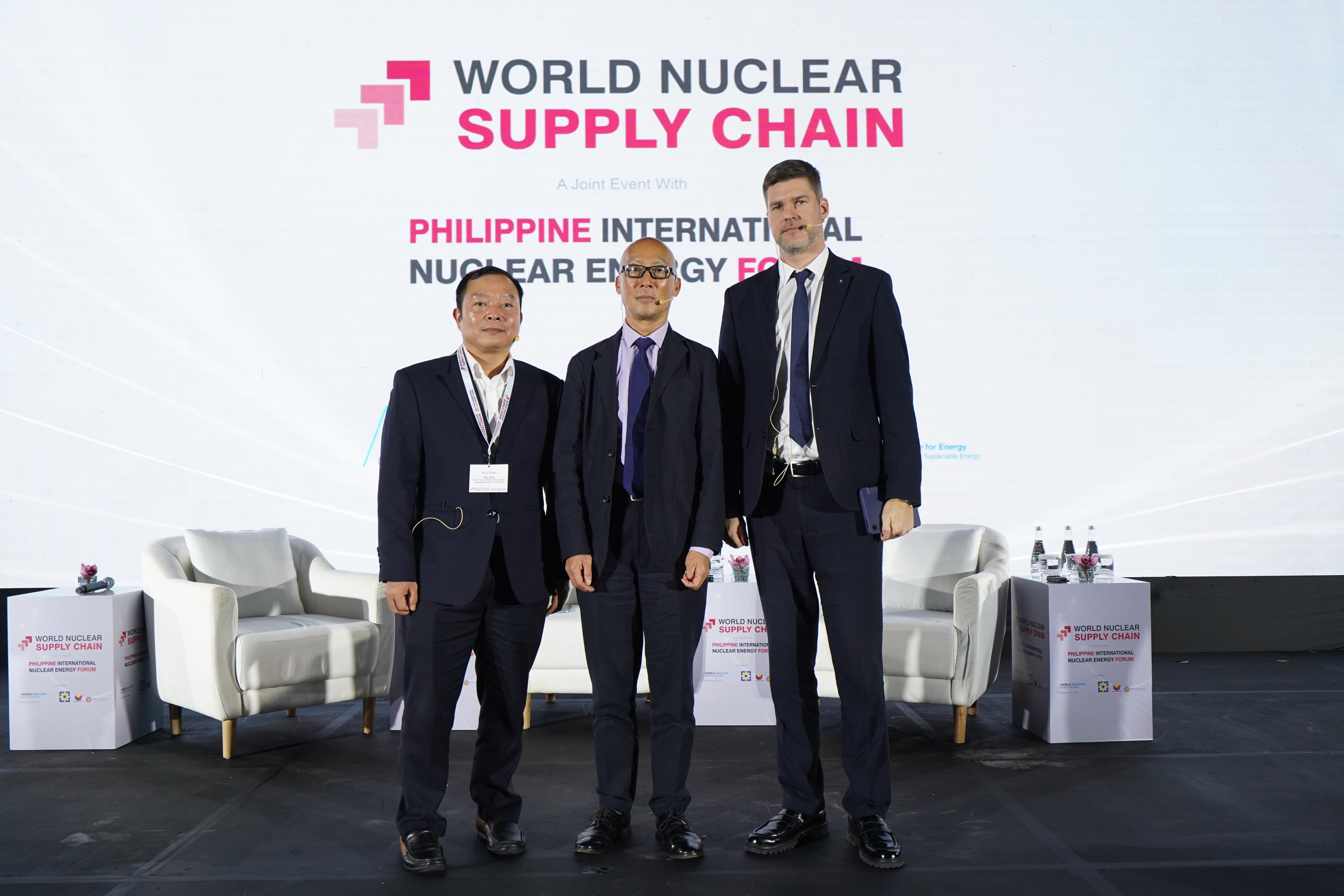
Dmitry Raspopin, Director of Rosatom's flagship office in
Vietnam, made two presentations at the forum. In the session "Pathway to
First Concrete: Delivering Nuclear in Vietnam", he, together with the a
representative of the Board of Directors of the Vietnam Electricity (EVN)
company Nguyen Huu Huan, spoke about the approach to the implementation of the
Ninh Thuan-1 NPP project. The discussion discussed the implementation of the
project, interaction between the Russian and Vietnamese sides in personnel training
and prospects for cooperation in other areas, such as the Center for Nuclear
Science and Technology (CNST), additive and quantum technologies.
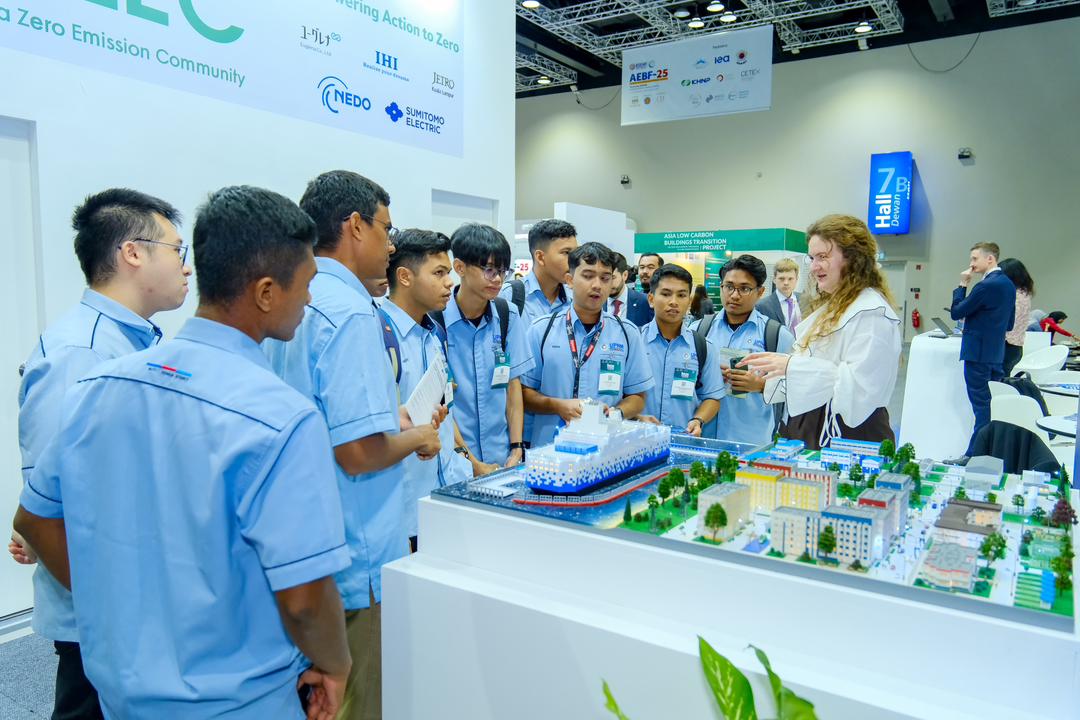
The second report, in the session "Nuclear Afloat: Floating Power for Island and Coastal Markets", was devoted to floating NPPs, their advantages and features of the implementation of such projects. Dmitry Raspopin spoke about the experience and references of Rosatom State Corporation on the example of the world's first floating power unit Akademik Lomonosov and spoke about the export offer of Rosatom State Corporation in the field of distributed nuclear power generation - floating power units PEB-100 with the latest reactor plants of the RITM series.
"Rosatom is ready to share international experience and technological competencies in the field of nuclear energy, including solutions for low-power nuclear power plants in land-based and floating versions. Moreover, Rosatom is currently executing the first export contract for the construction of a land-based small modular nuclear power plant (SMR) in Uzbekistan, and was the first in the world to sign an export agreement to supply electricity from floating power units to consumers in Indonesia. We are interested in expanding cooperation with partners in Southeast Asia, in particular, with the Philippines, in order to help the countries of the region master modern, safe and sustainable energy solutions," said Dmitry Raspopin.
The World Nuclear Association (WNA) is the only industry
organization with a global mandate to promote nuclear energy, uniting about
3000 members from 180 countries and representing the interests of the industry
at key world venues, including the IAEA. The headquarters are located in
London.
The World Nuclear Supply Chain Conference (WNSC) is the leading annual conference on global nuclear supply chains. In 2026, the conference is for the first time combined with the Philippine International Nuclear Energy Forum and is being held in Manila on October 20-21; it is organized by WNA and the Philippine Department of Energy. In 2025, the conference brought together 310 delegates from 196 companies from 27 countries.
Cooperation between Rosatom and the Philippines is developing on the basis of two "framework" memorandums of understanding in the field of peaceful use of nuclear energy, signed with the Ministry of Science and Technology and the Department of Energy. In June 2026, the head of Rosatom, Alexei Likhachev, noted that the Philippine side is primarily interested in a floating nuclear power plant, which is due to the island structure of the country, but in order to move on to practical implementation, it is first necessary to form an intergovernmental legal framework.
Now there are about 80 projects of small modular reactors in the world at the design stage. At the same time, Rosatom is the first to begin to implement ideas in iron, in particular, in the field of floating power units. Since 2020, the world's first floating nuclear power plant Akademik Lomonosov has been operating in Chukotka (it includes two reactors of the previous generation KLT-40S), which has generated almost 1.4 billion kWh of electricity during this time. The "heart" of the new FPU projects will be innovative marine reactors of the RITM series - they are more powerful, more compact and require less refueling compared to their counterparts of previous generations. The long-term operation of RITMs as part of the Russian nuclear icebreaker fleet has proven their reliability and efficiency, so they began to implement solutions in the field of small nuclear power - low-power nuclear power plants that can be located both on land and in water. For foreign markets, a project of a floating power unit (PEB-100) with RITM-200M reactor plants, adapted for operation in a warm climate, has been developed. The capacity of one unit will be 100 MW.