The Fuel Division of Rosatom and Vietnam's National Oil and Gas
Corporation, Petrovietnam, have signed a memorandum of understanding in the
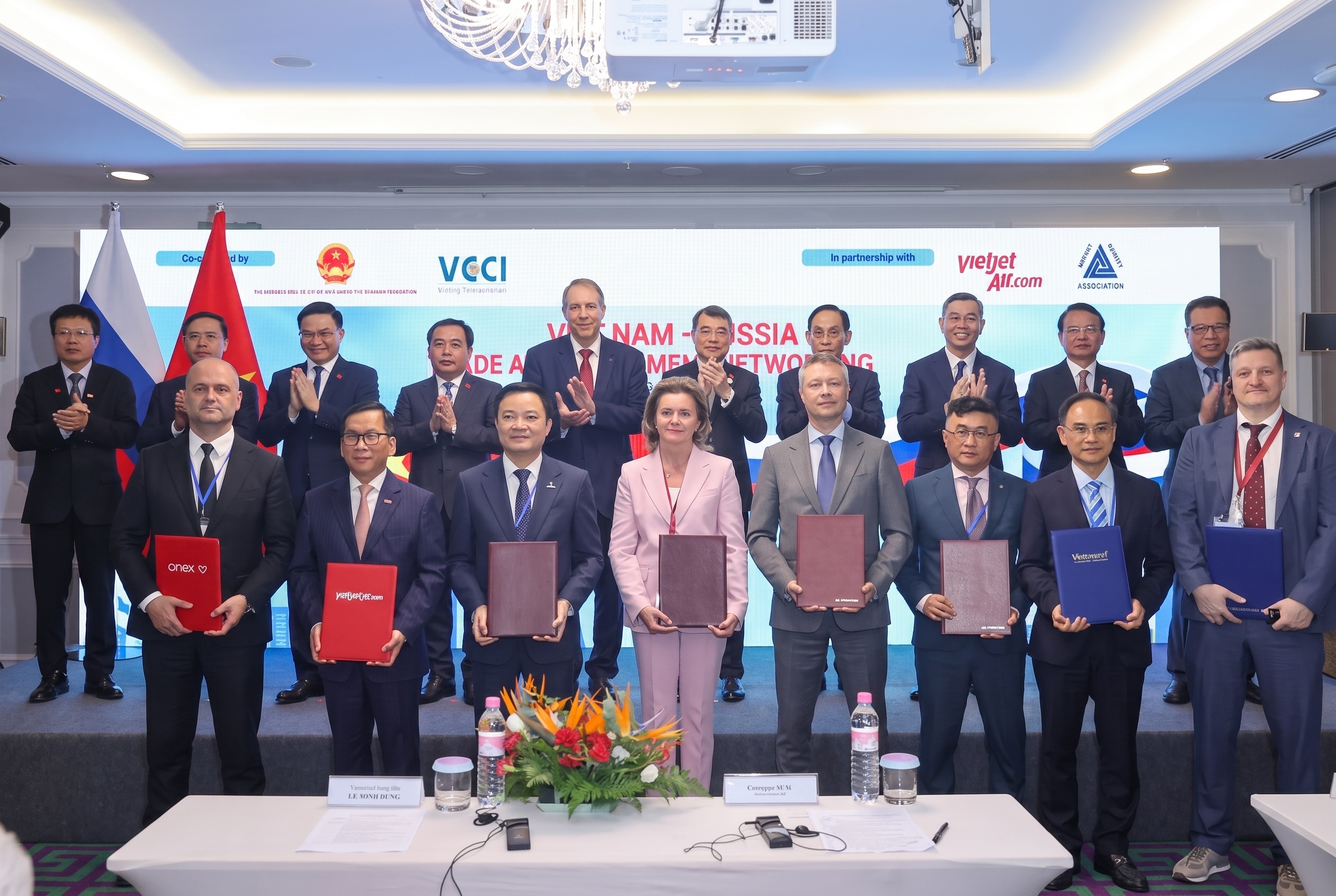
field of additive technologies. The document was signed by Ilya Kavelashvili,
Director of the Additive Technologies Business Unit at Rosatom’s Fuel Division,
and Fan Tu Ziang, Deputy General Director of Petrovietnam.
A key project of this collaboration is the establishment of a modern additive technologies center in Vietnam, which the Vietnamese corporation plans to use to enhance the efficiency of its operations. With 3D printing capabilities, Petrovietnam will be able to manufacture complex components for drilling and pumping equipment, thus reducing production downtime through rapid prototyping. The introduction of additive technologies will also accelerate the maintenance and repair of equipment and large-scale products, reducing dependence on imported spare parts.
The project is scheduled to be implemented in several phases: starting with a technical audit of Petrovietnam’s production processes conducted by Russian specialists, followed by the configuration agreement for the center and a list of additive equipment, leading up to the center's official opening.
“Collaboration in additive technologies is a promising avenue for expanding bilateral partnerships between Russia and Vietnam. We expect to successfully implement the project to create a national Additive Technologies Center. The exploration of potential sites for the center is scheduled for July of this year, with the opening anticipated as early as 2027,” noted Fan Tu Ziang.
For the Fuel Division of Rosatom, this project extends beyond a one-time export deal. Russian specialists offer their international partners not just equipment supply, but a comprehensive industry ecosystem: from scientific and technical support and raw material supply to engineering education.
“We already have a successful experience in exporting Russian additive technologies. The first foreign Additive Technologies Center of Rosatom, equipped with Russian technology, has been established in Belarus, and a large-scale industrial 3D printer for the aerospace sector has been supplied to India. This proves that Russian solutions—namely equipment, materials, and software—are competitive on a global market. In the future, we are open to consider localization of 3D printers assembly in Vietnam for further promotion in the markets of Southeast Asia,” commented Ilya Kavelashvili.
Additive technologies enable the manufacturing of parts and components that
are difficult to produce using traditional methods such as casting and
machining. 3D printing reduces the weight of products, optimizes material
usage, and shortens production timelines. Modern 3D printers allow for quick
adjustments to printing parameters for products made from various materials.
3D-printed products find applications across a wide range of fields—from
nuclear and aerospace technologies to medicine.
The Fuel Division of Rosatom (managed by TVEL JSC) includes enterprises involved in the fabrication of nuclear fuel, uranium conversion and enrichment, gas centrifuge production, as well as research and design organizations. As the sole supplier of nuclear fuel for Russian NPPs, TVEL supplies fuel to more than 70 energy reactors in 15 countries, research reactors in nine countries worldwide, and transport reactors for the Russian nuclear fleet. One in six energy reactors worldwide operates on TVEL fuel. The Fuel Division of Rosatom is the largest producer of enriched uranium globally and a leader in the stable isotopes market. The division is actively developing new businesses in chemistry, metallurgy, energy storage technologies, 3D printing, digital products, and the decommissioning of nuclear facilities. Within the scope of TVEL's Fuel Company, industry integrators for Rosatom in additive technologies and energy storage systems have been established. http://www.tvel.ru