Rosatom State Corporation and an Indonesian national
owned company named PT Pembangkit Listrik Nuklir have reached an agreement to
supply electricity generated by floating nuclear power units to consumers in
North Maluku, Eastern Indonesia. The agreement was signed on the sidelines of
Russian Energy Week (REW) in Moscow on 16 October 2026, marking a significant
milestone in bilateral energy cooperation between Russia and Indonesia.
Rosatom will deploy two FPU-100 nuclear Floating Power Units with a combined capacity of 200 MW to supply electricity to the northern part of Halmahera Island in North Maluku as part of the project. The units would provide reliable, low-carbon electricity using RITM-series reactor systems, which have demonstrated their efficiency, reliability, and safety through years of operation aboard nuclear-powered icebreakers. The FPUs are expected to begin supplying their first megawatts of electricity to consumers in Indonesia as early as five years after the key terms of the electricity supply contract come into effect.
“Cooperation between Rosatom and Indonesia is progressing rapidly. Our recent meeting with President Prabowo Subianto reaffirmed that this world’s largest island nation is consistently pursuing a course toward strengthening energy security and achieving carbon neutrality. Our new agreement marks a major milestone in this effort. Rosatom is ready to offer the most advanced and proven technological solutions available on the global market. We are discussing much more than electricity supplies. We are laying the foundation for a long-term partnership. I would like to emphasize the historic significance of this milestone – the world’s first-ever export agreement for electricity supply from a floating power unit. I am convinced that this will send a strong signal to the global business community: with systematic government support, the private sector is actively taking the lead in initiating nuclear infrastructure projects capable of transforming the country's economy," commented Alexey Likhachev, Director General of Rosatom State Corporation.
“Leading Indonesia's energy transition is our foremost objective and responsibility as a national investor. We firmly believe that providing our people with clean, reliable, and carbon-free electricity is essential to securing Indonesia's long-term energy future. Nuclear power offers a sustainable solution to meet our nation's growing energy demands while supporting economic development, particularly in Eastern Indonesia. It is important to emphasize that this project is structured entirely as a business-to-business (B2B) initiative, driven by private-sector investment without reliance on funding from Indonesia's State Budget (APBN). We are deeply grateful for the opportunity to advance this historic partnership and sincerely appreciate the continued support of the Indonesian Government, particularly the Embassy of the Republic of Indonesia in Russia, in facilitating this important milestone,” stated Yudi Utomo Imardjoko, Indonesian Nuclear Scientist and Director of PT Pembangkit Listrik Nuklir.
“This agreement represents a significant milestone in our shared ambition to strengthen Indonesia's energy independence and secure a sustainable future for generations to come. I extend my sincere appreciation to President Vladimir Putin, the Russian delegation, and Rosatom for their invaluable cooperation and commitment to this partnership. Above all, I wish to thank President Prabowo Subianto and Indonesian Minister of Defense Sjafrie Sjamsoeddin for entrusting Professor Yudi and me with the responsibility of bringing a 200 MW nuclear power project to North Halmahera, North Maluku. Through this historic agreement, we are laying the groundwork for a new era of energy development that will benefit the people of North Maluku and contribute to the broader progress of Eastern Indonesia,” said Haji Romo Nitiyudo Wachjo, the investor of PT Pembangkit Listrik Nuklir.
Cooperation with Indonesia. In 2025, the Indonesian government included nuclear power in its
National energy plan, recognizing it as one of the key instruments for ensuring
long-term energy security and achieving carbon neutrality by 2060.
On July 31, 2024, Prabowo Subianto, then Indonesia’s
Minister of Defense and President-elect, visited Moscow and held talks with
Russian President Vladimir Putin at the Kremlin. During the meeting, Subianto
formally expressed Indonesia’s interest in cooperation with Rosatom State
Corporation.
In May 2026, Rosatom Director General Alexey Likhachev met with Indonesian President Prabowo Subianto to discuss prospects for cooperation in the peaceful use of nuclear energy. The discussions covered a broad range of areas, including the development of nuclear power projects, nuclear infrastructure, personnel training, and non-energy applications of nuclear technologies.
Rosatom has proposed a two-stage approach to nuclear power development in Indonesia. The first stage envisages the deployment of small-scale nuclear Floating Power Units, while the second involves the construction of land-based nuclear power plants equipped with large-capacity reactors.
Rosatom’s Leadership in Small
Modular Reactors (SMRs). Amid growing global
demand for small-scale nuclear power solutions, nuclear Floating Power Units
have the potential to transform the energy landscape by effectively addressing
existing and anticipated electricity shortages in remote coastal areas. Operating
as a “green battery,” these vessels can provide a continuous supply of
electricity for several decades, regardless of weather conditions. They are
well suited to meeting the energy needs of both industrial facilities and
population centers.
There are currently approximately 80 small modular reactor (SMR) projects at the design stage worldwide. Rosatom, however, has been a pioneer in turning these concepts into operational facilities, particularly in the field of floating nuclear power. Since 2020, the Akademik Lomonosov - the world’s first floating nuclear power plant - has been operating in Chukotka, Russia. Equipped with two previous-generation KLT-40S reactors, the plant has generated nearly 1.4 billion kWh of electricity since entering operation.
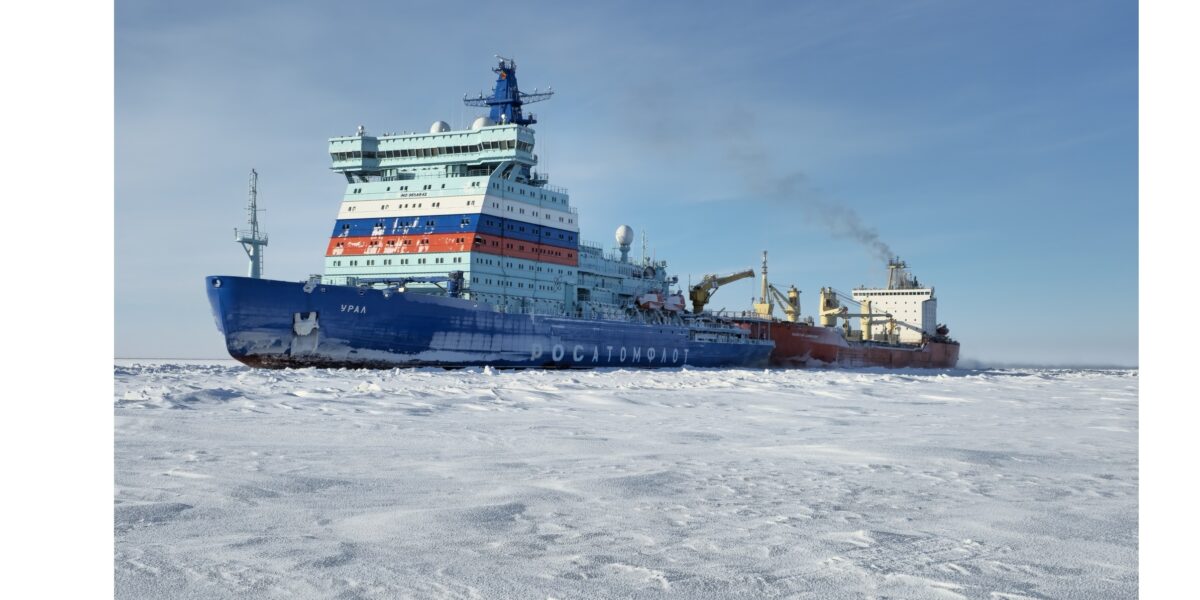
The innovative RITM-series marine reactors will form the core of the new nuclear Floating Power Units (FPUs). Compared with previous-generation reactors, they offer greater power output, a more compact design, and longer intervals between refueling. Years of successful operation aboard Russia’s nuclear-powered Icebreaker fleet have demonstrated the reliability and efficiency of RITM reactors, paving the way for their application in small-scale nuclear power plants (SNPPs) that can be deployed both on land and at sea. For international markets, Rosatom has developed the FPU-100 nuclear Floating Power Unit, equipped with RITM-200M reactors and adapted for operation in warm climates. Each vessel will have a generating capacity of 100 MW.
Rosatom is currently constructing its first export-oriented small-scale nuclear power plant (SNPP) in Uzbekistan, featuring RITM-200N reactors. The corporation is also building a series of FPU-106 nuclear Floating Power Units equipped with RITM-200S reactors to supply electricity to a major copper mining industrial cluster in Russia’s Chukotka Autonomous Region.
Rosatom has extensive experience in implementing nuclear power projects internationally. The corporation is currently constructing 27 nuclear power plants across nine countries, making it the global leader in terms of the number of nuclear power plant construction projects underway abroad.
Russia continues to actively develop cooperation with friendly states. Despite external restrictions, the Russian economy continues to expand its export potential, supplying goods, services, and raw materials to markets worldwide. Major international energy projects continue to move forward, with Rosatom and its divisions playing an active role in their implementation.