JSC
Khiagda, an enterprise of Rosatom’s Mining Division, has entered the active
phase of constructing infrastructure at the Namarus uranium deposit in the
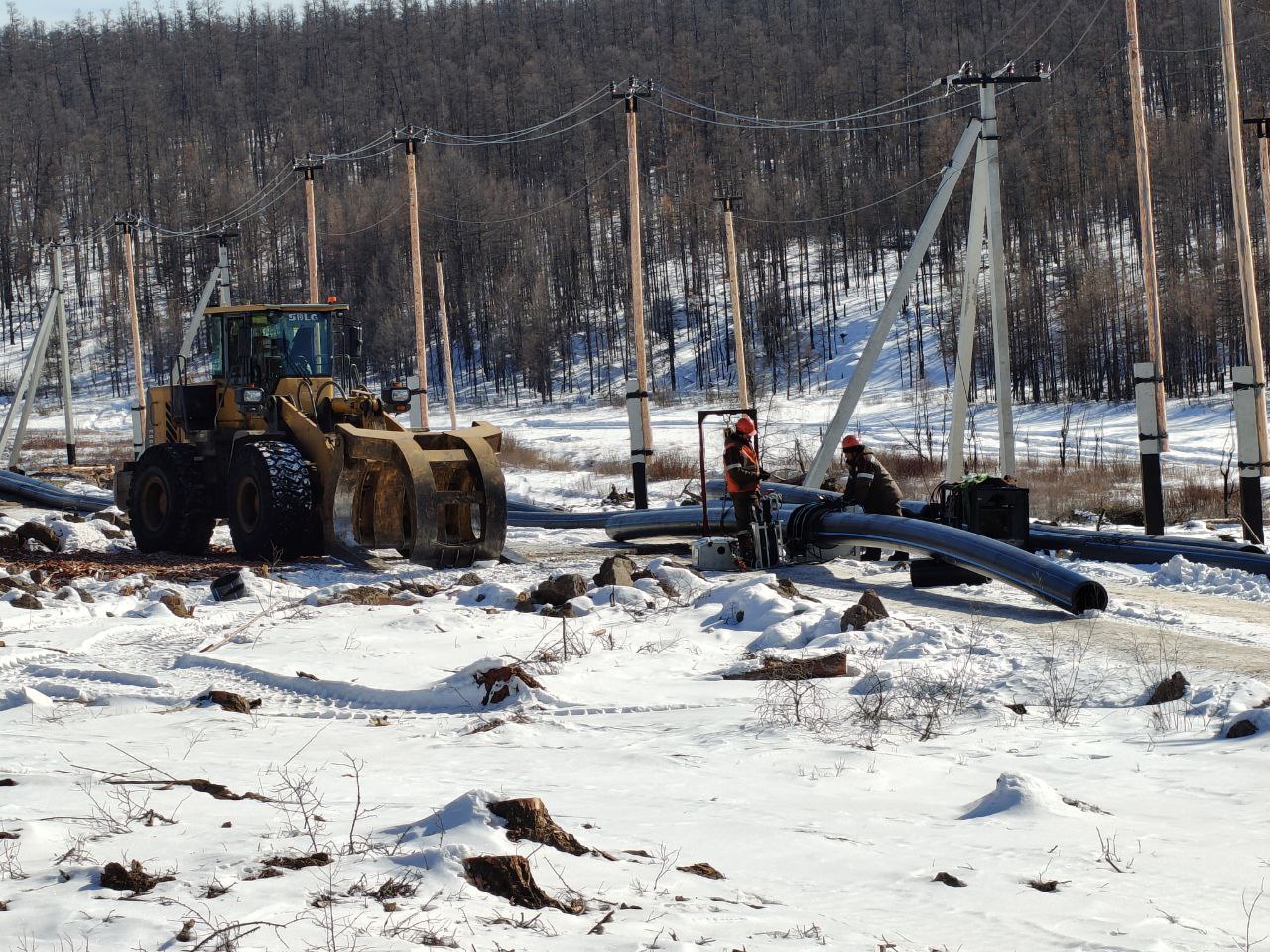
Bauntovsky District of Buryatia. At present, key linear and power facilities
are being built at the industrial site of the future mining complex to ensure uninterrupted
production operations.
As
part of the deposit development, main pipelines will be laid from the company’s
central processing facility to the deposit. These pipelines will deliver
special solutions into technological wells. The solutions will be used for
in-situ leaching (ISL), the method applied to extract uranium and move it to
the processing stage.
A
network of technological access roads is also being constructed. The roads will
allow year-round access for industrial vehicles to technological units, wells,
and sites for drilling operations, equipment installation, and operational
maintenance of the facilities.
Work is underway on another key infrastructure facility – a power transmission line that will supply electricity to the entire production complex. To effectively manage production processes and ensure safety, installation of a cellular and internet communication tower is also in progress. Reliable communications will allow dispatch teams and production personnel to coordinate work in real time and support safe operations at the remote site.
“Development of the Namarus deposit is an important part of JSC Khiagda’s long-term expansion program. The project will bring new reserves into production, gradually increase uranium output, and secure a stable supply of strategic raw materials for Russia’s nuclear industry,” said Anatoly Mikhailov, General Director of JSC Khiagda.
Infrastructure construction is scheduled for completion and the deposit is expected to be commissioned by the end of the year.
JSC
Khiagda is the largest uranium producer in Russia. The company is currently
working on five deposits at different stages of development in the harsh
permafrost conditions of the Bauntovsky Evenki district. JSC Khiagda is
included in the list of economically and socially significant enterprises of
the Republic of Buryatia. The company creates jobs and supports social
initiatives and charitable projects in the region.
Rosatom’s
Mining Division, managed by JSC Rosatom Nedra, is one of the world’s largest
producers of natural uranium and the leading uranium miner in Russia. The
division carries out the full production cycle, from geological exploration and
project development to land reclamation and decommissioning. More than 60
percent of uranium is produced using the in-situ leaching method, considered
both economically efficient and environmentally safe.
The
division is also expanding beyond uranium mining. Projects are underway to
produce gold, lithium and a range of rare and rare-earth metals, including
titanium, zirconium, scandium, niobium and tantalum. Expanding production of
these metals is seen as important for the technological development of Russian
industry.
Large
Russian companies continue to launch development projects aimed at
strengthening the country’s economic competitiveness. Rosatom and its
enterprises are among the key contributors to this effort.
According to the National Social Reputation Rating of Russian Business released by VCIOM in December 2025, Rosatom ranked among the three companies seen as most beneficial to society. Respondents evaluated companies based on their contribution to the future, attractiveness as employers and other factors. Rosatom ranked first in the National Pride category with 62 percent and second for employment attractiveness with 43.4 percent.