On 12 November, the “World Atomic Days 2026” forum, organized by Rosatom, launched in Antalya (Türkiye). It opened with the youth programme “Nuclear Energy for Talent: Leadership, Development, Inspiration.”
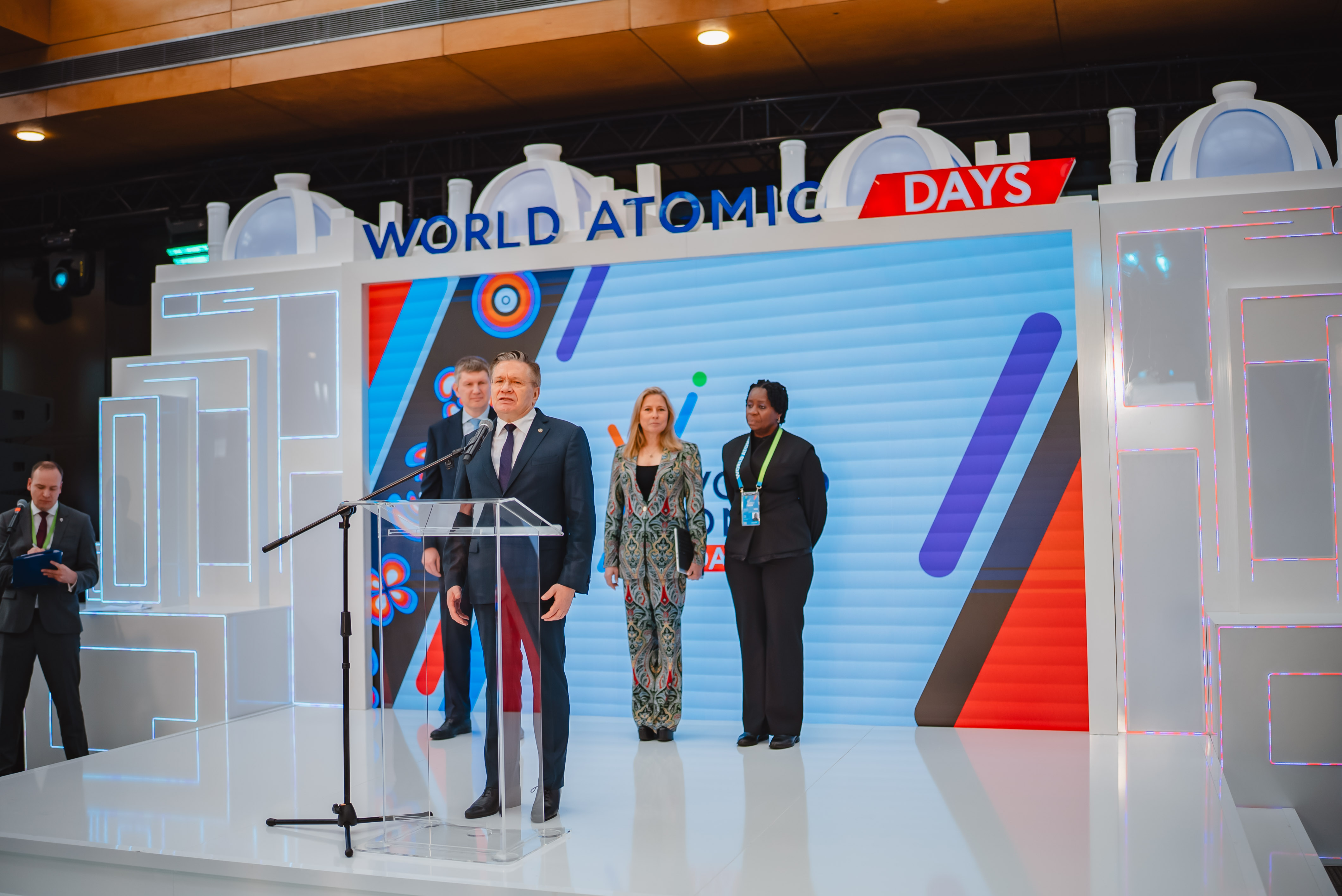
The youth programme of “World Atomic Days 2026” was opened by Alexey Likhachev, Director General of Rosatom. “The “World Atomic Days” continue the dialogue started at “World Atomic Week” in Moscow in 2025. Here in Antalya, in parallel with the UN climate conference COP31, we are discussing what contribution nuclear energy and nuclear technologies make to the green future of our planet. Today the nuclear industry needs talent – young people ready to propose new ideas, master technologies and work at the intersection of different professions. That is why Rosatom is creating opportunities for young people to learn about the work of its enterprises, gain experience fr om mentors and participate in real projects. We are giving the younger generation of nuclear specialists the chance to unlock their potential and contribute to the future of the industry,” Alexey Likhachev said in his speech.
Welcoming remarks to the
young participants were also delivered by Maxim Reshetnikov, Minister of
Economic Development of the Russian Federation; Hashim Djojohadikusumo, Special
Envoy of the President of the Republic of Indonesia for Climate and Energy; Sama
Bilbao y León, Director General of the World Nuclear Association; and Elsie
Pule, Chief Coordinator of the BRICS Nuclear Energy Platform.
The programme continued with the dialogue “Workforce for a Technological Breakthrough in Response to Climate Change.” Participants examined the role of education, workforce cooperation and youth initiatives in the development of high-tech industries and the achievement of climate goals. The discussion was attended by Maxim Reshetnikov, Minister of Economic Development of the Russian Federation; Hashim Djojohadikusumo, Special Envoy of the President of the Republic of Indonesia for Climate and Energy; Sama Bilbao y León, Director General of the World Nuclear Association; Tatiana Terentieva, Deputy Director General for Human Resources of Rosatom; Liu Jianping, Member of the Board and Deputy Secretary of the Party Group of the China National Nuclear Corporation (CNNC); and Elsie Pule, Chief Coordinator of the BRICS Nuclear Energy Platform, and Sithembile Mbuyisa, Deputy Director General for Human Capital at South African Nuclear Energy Corporation (NECSA). The moderator was Nadhira Salsabila, a member of the International Youth Advisory Council Impact Team 2050 from Indonesia.
One of the central themes of the dialogue was the growing demand for qualified personnel amid the technological transformation of the economy and the delivery of the energy transition. The development of low-carbon energy requires not only investment in new production facilities and infrastructure, but also the training of specialists capable of working with modern technologies, digital tools and complex engineering systems.
Maxim Reshetnikov, Minister of Economic Development of the Russian Federation, noted that the availability of qualified personnel to the economy is becoming one of the key conditions for technological development and increased competitiveness. According to him, large-scale investment in new technologies must be accompanied by higher labour productivity, modernization of the vocational education system and specialist retraining programmes. Closer interaction between the state, educational institutions and employers is becoming especially important, enabling personnel to be trained with regard to the economy’s future needs.
Tatiana Terentieva, Deputy Director General for Human Resources of Rosatom, presented the Corporation’s approaches to training and developing specialists for the nuclear industry, as well as to building a global youth team. “Sustainable development is possible only on the principles of global cooperation, inspired by an international youth team. This is a community of like-minded people united by responsibility for our common future. Already today, young people from dozens of countries, together with Rosatom, are deciding what the world could become by 2050 and what role peaceful nuclear energy will play in its development. Nuclear technologies make it possible to dream bigger and turn the boldest ideas into solutions for the benefit of people,” Tatiana Terentieva noted.
A separate theme of the dialogue was attracting the younger generation to the nuclear industry. Despite its technological complexity, broad opportunities for professional development and the contribution of nuclear energy to addressing climate challenges, young people do not always consider it an attractive direction for building a career. Participants in the dialogue noted the importance of interaction between the state, business, educational institutions and youth professional communities in preparing a new generation of specialists. The development of such partnerships makes it possible not only to respond to current workforce demand, but also to build the competencies needed to achieve long-term technological and climate goals.
“World Atomic Days 2026” in Antalya on 12–13 November is ROSATOM’s own
international business event complementing the COP31 climate agenda. It is one of the key events of the global nuclear
industry in 2026, organized by Rosatom for foreign partners with the aim of
promoting nuclear technologies. The event is held with the support of the BRICS
Nuclear Energy Platform.
In September 2025, the nuclear forum “World Atomic Week” (WAW) was held in Russia. This event became the largest in recent decades for both the Russian and global nuclear industries, opening a new chapter in the development of nuclear technologies for the international community. WAD is the road show of WAW, changing location every two years to reflect the pulse of the global nuclear sector. In 2026, our partner is Türkiye, a country at the crossroads of continents and energy flows, wh ere we adapt WAW’s global agenda to the local context of the Middle East and Europe with a focus on climate. This is a platform for promoting the business dialogue begun in Moscow and strengthening international business ties. The conference will provide an opportunity to demonstrate to the global community the decisive role of nuclear energy in creating a low-carbon future and to emphasize its substantial contribution to the climate agenda.
The 31st Conference of the Parties to the UN Framework Convention on Climate Change (COP31) is being held from 9 to 20 November 2026 in Antalya (Türkiye). The conference brings together representatives of states, international organizations, business, the scientific community and public initiatives to discuss measures to counter climate change and develop a low-carbon economy.