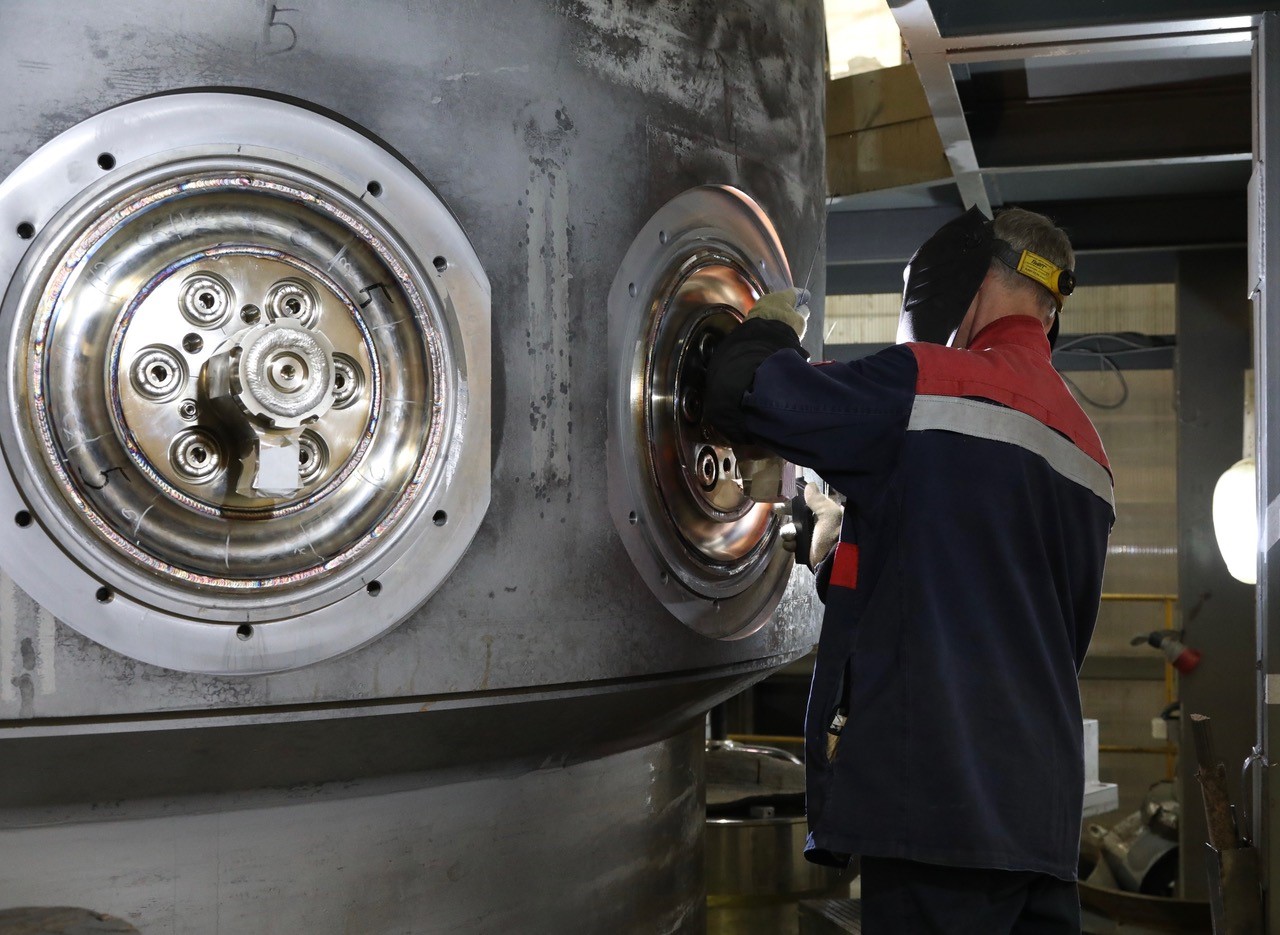
On May 14, 2026, the ZiO-Podolsk plant near Moscow (Rosatom's Mechanical
Engineering Division) has completed the trial assembly of the first reactor
unit for the series-produced Leningrad universal nuclear icebreaker. The vessel
had been laid down at the shipyard in January 2024.
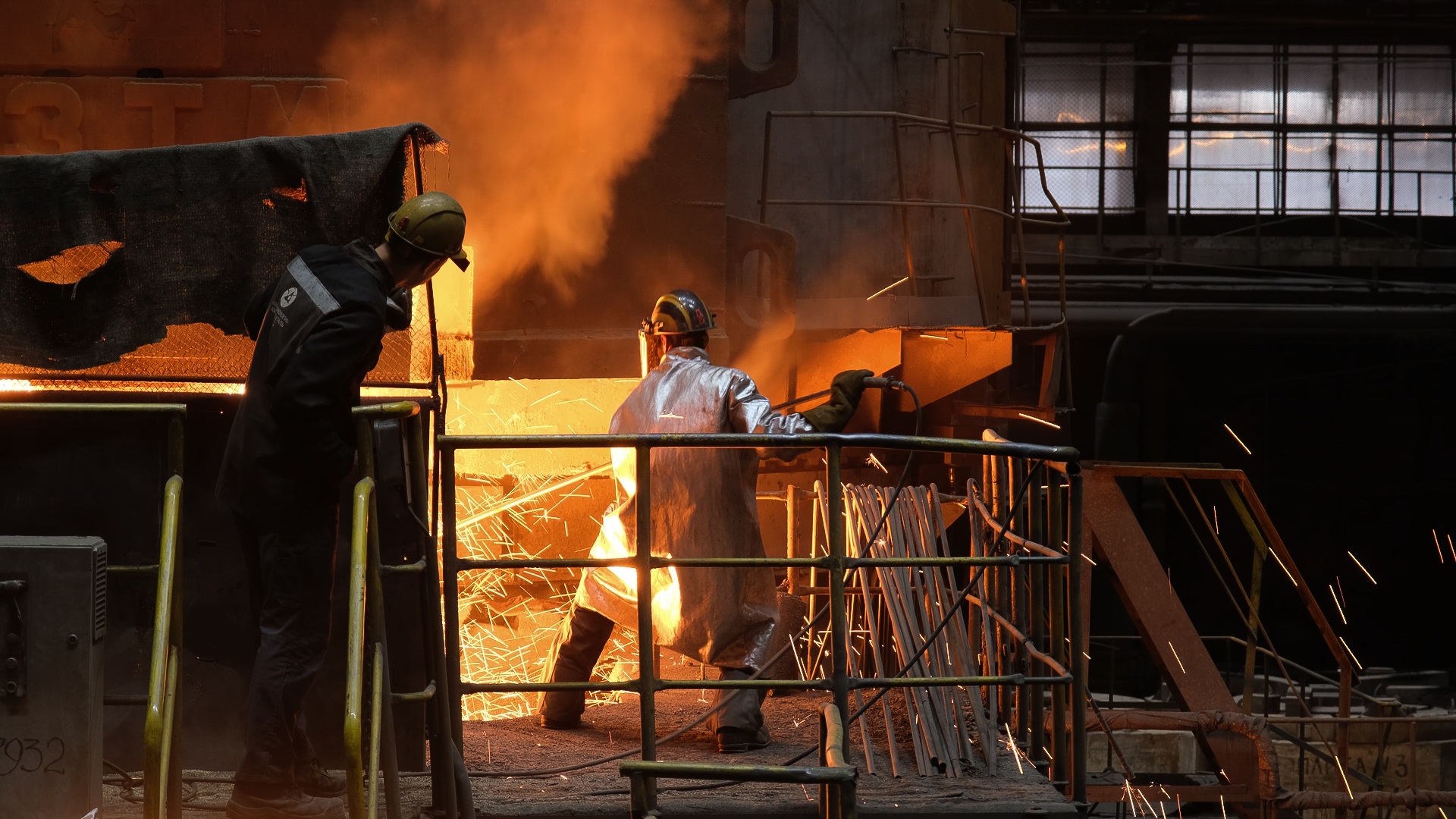
The trial assembly is the last stage in the multi-year cycle of reactor unit manufacturing, during which all assemblies and elements are assembled in the design position – exactly as in the drawings, down to one thousandth of a millimeter. The successful completion of the operation allowed engineers to ensure that the product is fully ready for shipment and subsequent installation into the ship's hull and will operate reliably for at least the next 40 years.
"This RITM was the 13th of its kind. Our enterprise has already manufactured ten RITM-200 and two more powerful RITM-400 reactor units. Over these years, we have accumulated a tremendous amount of knowledge and skills, and today we possess competencies unmatched anywhere else in the world," said Anton Lebedev, Head of ZiO-Podolsk, mentioning that dozens of production secrets and a number of patented solutions were used in the manufacture of reactor units.
The icebreaker power plant includes two RITM-200 reactor units. The second reactor unit for the Leningrad nuclear icebreaker is currently being prepared for hydraulic testing, where the reactor pressure vessel integrity will be checked for leaks under high pressure. After these tests are completed, they will proceed to trial assembly. A total of 15 RITMs are at various stages of production at the enterprises of Rosatom's Mechanical Engineering Division, three of them having already reached the final stages. These are units for nuclear icebreakers, small modular reactor (SMR) nuclear power plants and floating power units.
RITM-200 are the newest marine reactor units for the Russian nuclear
icebreaker fleet. Their design allowed the equipment to be made 1.5 times more
compact and significantly more powerful than its predecessors. This helped make
nuclear ships versatile: on the one hand, they could break through
three-meter-thick ice in deep water, and on the other, they could enter the
mouths of northern rivers. As a result, cargo transportation along the Northern
Sea Route became more cost-effective.
Currently, five universal nuclear icebreakers of Project 22220 are
equipped with RITM-200 units: the lead Arktika and the serial Sibir, Ural,
Yakutia and Chukotka. So far, the first four have already been guiding cargo
ships along the Northern Sea Route for several years. The last one is scheduled
for commissioning in 2026.
New equipment for the icebreaker fleet is a contribution not only to
solving governmental tasks in terms of increasing cargo traffic on the northern
seas and developing Arctic cities and towns, but also to creating alternative
reliable routes for global logistics, reducing dependence on southern routes
and shortening the time of cargo delivery. For instance, the route from Hamburg
to Shanghai through the Northern Sea Route can take about 18 days, while coming
through the Suez Canal it would take 30-35 days.
The RITM-200 reactor units, which proved their efficiency in the
conditions of the Far North, became the basis for energy solutions in the
field of small-scale nuclear power capable of supplying electricity to remote
areas in the country and abroad. Thus, a series of floating power units are
being built to power a large copper cluster in Chukotka and SMR power plants in
Yakutia and Uzbekistan.
The entire chain of production for these reactors is provided by
enterprises of the Rosatom State Corporation's Mechanical Engineering Division
– from the design and production of blanks to the manufacture and installation
of equipment. Afrikantov OKBM is the designer, complete supplier and
manufacturer of reactor in-vessel internals for RITM-200 and RITM-400 reactor
units. Reactor vessel manufacture and trial assembly are performed at
ZiO-Podolsk.
The Mechanical Engineering Division of Rosatom State Corporation is
Russia's largest power engineering holding in terms of production volume and
revenue. It supplies a comprehensive range of equipment for reactor and turbine
islands of all Russian-designed NPPs; designs manufactures, and delivers
integrated solutions for the power, oil and gas, and other industries.
In 2018, the Russian Government authorized Rosatom as the infrastructure
operator of the Northern Sea Route. The corporation supervises the federal
project "Development of the Northern Sea Route", as well as takes
part in implementing the Northern Sea Route Development Plan until 2035 and the
initiative for socio-economic development of the Russian Federation until 2030,
"All-Year-Round Northern Sea Route", approved by the Russian
Government. One of Rosatom's strategic objectives consists in making the NSR an
efficient passage connecting Europe, Russia, and the Asia Pacific Region. In
December 2024, a federal project was approved to develop the Great Northern Sea
Route – the transport corridor connecting St. Petersburg and Kaliningrad to
Vladivostok.
The Northern Sea Route is the shortest shipping route between Western Eurasia and the Asia-Pacific Region. The NSR administratively begins at the border between the Barents and Kara Sea (Kara Strait) and ends in the Bering Strait (Cape Dezhnev). The route is 5,600 km long. The NSR passes through the seas of the Arctic Ocean (Kara, Laptev, East Siberian, Chukchi). The NSR services the ports in the Arctic and major Siberian rivers. There are currently six major seaports located in the waters of the NSR in the Arctic zone of the Russian Federation: the port of Sabetta, the port of Dickson, the port of Dudinka, the port of Khatanga, the port of Tiksi, and the port of Pevek. Rosatom supports preparing a federal project to develop the Great Northern Sea Route – the transport corridor from St. Petersburg and Kaliningrad to Vladivostok.